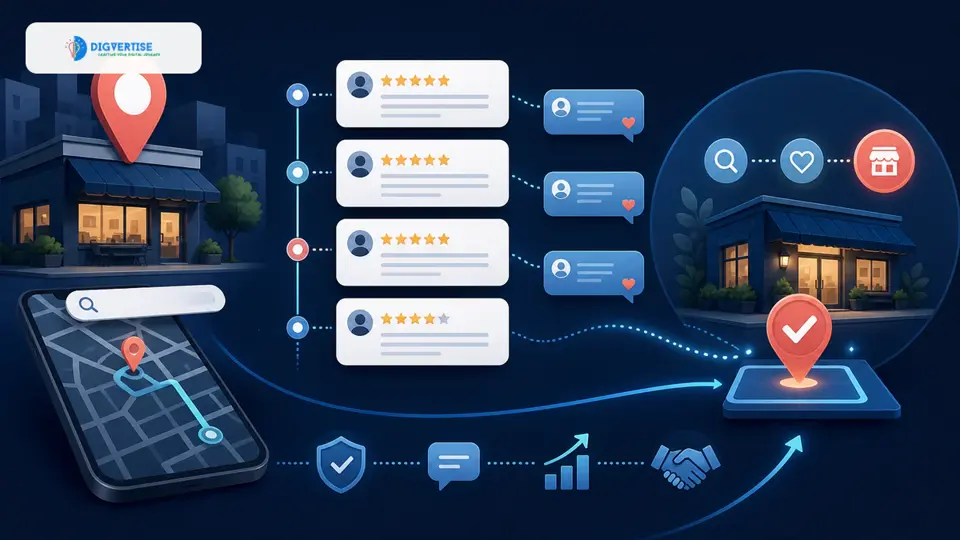

Before booking, most patients look a clinic up. They check its Google profile, read reviews, look at the timings and try to work out whether the doctor treats their problem. A clinic that is hard to find or hard to understand can lose patients to one that is clear.
Marketing a clinic is not like marketing a shop. Doctors are bound by a professional code that discourages self-promotion, and some kinds of health advertising are restricted by law. The encouraging part: most of what genuinely helps patients is information, and accurate information is treated very differently from promotion.
Which rules apply today
The National Medical Commission notified new professional conduct regulations in August 2023 and put them in abeyance later that month. Until a further notification, the Indian Medical Council (Professional Conduct, Etiquette and Ethics) Regulations, 2002 continue to guide doctors’ conduct, including advertising.
Section 6.1 of the 2002 regulations treats soliciting patients, directly or indirectly, by a doctor, a group of doctors or an institution as unethical. It discourages publicity that draws attention to a doctor’s skill, qualifications or achievements for self-aggrandisement, and boasting of cases, operations or cures. It also lists formal announcements a doctor may make, including starting practice, changing address and a public declaration of charges.
Two more frameworks matter for anything a clinic publishes:
- The Drugs and Magic Remedies (Objectionable Advertisements) Act, 1954 restricts advertisements for drugs and remedies aimed at the diseases and conditions in its schedule, and advertisements that make false or misleading claims about drugs.
- The Advertising Standards Council of India (ASCI) code applies to advertising generally. In ASCI’s complaints report for 2023–24, healthcare was the most violative sector, so health claims attract close attention.
Information or promotion: a working line
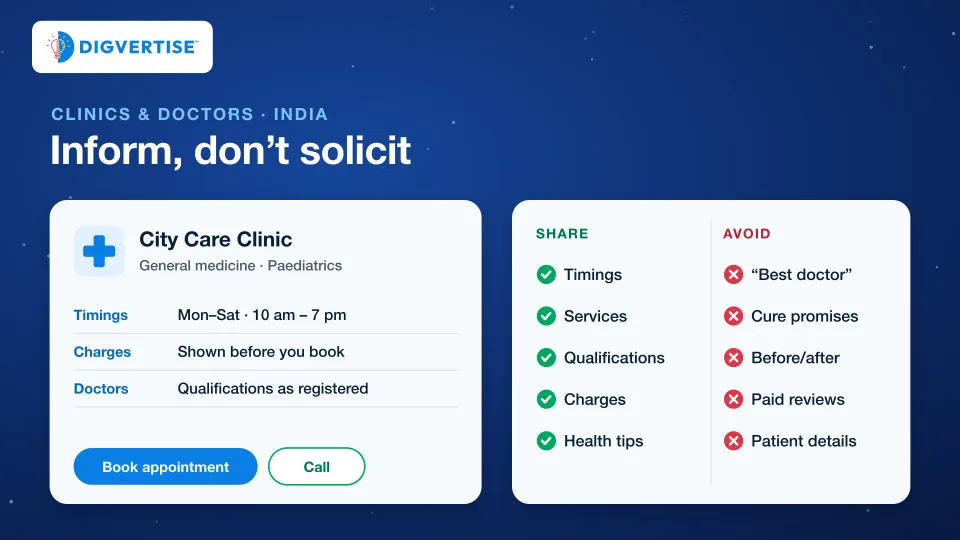
A practical test: does the content help a patient decide and act, or does it try to persuade them that this doctor is better than others? The first is usually fine. The second is where the code’s concerns begin.
| Area | Generally informational | Avoid |
|---|---|---|
| Google profile | Accurate name, address, timings, services and photos of the clinic | Keywords stuffed into the name, fake reviews, discounts for reviews |
| Website | Registered qualifications, services, timings, fees and how to book | “Best doctor in the city”, success-rate boasts, guaranteed cures |
| Health content | General education written or reviewed by a doctor, with sources | Content that frightens, pressures or promises outcomes |
| Patient stories | Only with written consent and without identifying details | Before-and-after photos or testimonials that promise results |
| Messages | Appointment confirmations and reminders for patients who booked | Bulk offers to people who never asked |
Your Google Business Profile
For many clinics, the Google profile brings more patient calls than the website. Google has additional guidelines for individual practitioners such as doctors, and for departments within larger institutions, so read them before you create or edit profiles.
- Use the clinic’s real-world name, exactly as on the signboard.
- Keep timings, holidays and phone numbers accurate; a wrong timing sends a patient to a closed door.
- Choose categories that match the practice, such as the specialty patients search for.
- Add real photos of the entrance, reception and waiting area, so patients recognise the place.
If your clinic does not appear on Maps at all, our guide to why a business does not show on Google Maps covers the usual causes.
A website that answers patient questions
A clinic website does not need to sell. It needs to answer the questions patients ask before they call:
- Who the doctors are, with qualifications and registration as registered.
- What the clinic treats and which procedures are offered.
- Timings, how to book, and charges or how charges are worked out.
- What to bring to the first visit, location, directions and parking.
- What to do in an emergency, and when not to wait for an appointment.
Make booking simple: a call button, a short form and a WhatsApp button for appointment questions. Keep the site fast on phones, because that is where most patients will open it.
Health content without promises
Educational articles can help patients and build trust, as long as they inform rather than promise. Explain when to see a doctor, how to prepare for a test or procedure, and which myths to ignore. Have a doctor write or review each article, show the date, and cite reliable sources. Avoid claims that a treatment cures a condition, especially for the diseases covered by the Drugs and Magic Remedies Act.
Reviews and patient privacy
Reviews help new patients decide. Ask satisfied patients to share their experience, and do not offer discounts or gifts in return. When you reply, thank the reviewer without confirming that they are a patient or mentioning anything about their health.
Information patients share through forms, WhatsApp or calls is personal data under the Digital Personal Data Protection Act, 2023, and the government notified the DPDP Rules in November 2025. In practice:
- Ask only for what you need to book the appointment.
- Say why you collect it, and keep it secure and away from personal phones where possible.
- Never post patient photos, reports or chat screenshots without explicit written consent.
Paid ads need extra care
Because the 2002 code treats soliciting patients as unethical, many doctors avoid ads that promote themselves, and ad platforms have their own healthcare policies. If you plan to run ads, get advice on your specific case first, and keep any ad strictly informational.
Measure without crossing lines
Track the actions that show patients found what they needed: calls from the Google profile, direction requests, appointment bookings and WhatsApp questions about appointments. Ask new patients how they found you. If people call to ask your timings again and again, the timings are not clear enough online.