

Customers often decide whether a business feels trustworthy before speaking to anyone. They compare the website with the local profile, look for recent reviews, check who is behind the company and notice whether contact details agree. Trust is the conclusion created by those signals working together.
No badge or design style can guarantee trust. The goal is to reduce avoidable uncertainty and give people enough truthful evidence to make the next decision.
1. The business identity is clear and consistent
The name, logo, phone, location, email domain and service description should agree across the website and important profiles. Inconsistency can look like neglect or impersonation. A complete About page and verifiable contact details help customers understand who is responsible.
2. The website feels maintained
Customers notice broken links, outdated dates, missing images and pages that do not work on mobile. Quality does not mean excessive animation. It means the site loads dependably, reads clearly and supports the task without surprises.
3. HTTPS and security basics are present
HTTPS protects data in transit and is now a basic expectation. Security also includes maintained software, sensible form handling and not requesting unnecessary sensitive information. Never present a security icon as proof of protections the business has not implemented.
4. Real people and responsibility are visible
For many services, customers want to know who will advise, deliver or respond. Genuine team information, leadership context and accountable authorship make the organization easier to evaluate. Avoid invented personas or generic portraits presented as real staff.
5. Reviews show credible customer experience
Reviews can reveal service detail, consistency and how the business responds when something goes wrong. Customers inspect recency and substance, not only stars. A balanced review record with professional responses often feels more credible than perfect but generic praise.
6. Proof supports the promise
Case studies, work samples, qualifications, process detail and specific testimonials can support claims. Evidence should be truthful, relevant and clear about context. A percentage without a method or a client story without permission can weaken trust rather than strengthen it.
7. Policies remove uncertainty
Privacy, terms, returns, cancellations, shipping or service policies matter according to the business model. They should be readable and consistent with the actual process. Policies hidden until after payment create friction and risk.
8. Contact options feel real
A professional domain email, working phone number, accurate location or service area and clear response expectation help. The right channels vary, but they should be monitored. A form that disappears without confirmation creates doubt at the most important moment.
9. Google Business Profile supports local reality
For local businesses, the profile connects identity, location, hours, reviews, photos and actions. It should match the website. Customers may use it as a fast verification layer even when they first discovered the business elsewhere.
10. Social presence is consistent, not necessarily constant
A recent and relevant social presence can show activity, people and work. Businesses do not need to post daily on every network. They need chosen channels that reflect the same identity and do not contradict current services or contact details.
11. Content answers real questions
Clear service explanations, FAQs and educational articles demonstrate whether the business understands the customer’s decision. Useful content avoids exaggerated promises, distinguishes facts from opinions and links changing claims to reliable sources.
12. The action path is transparent
Before clicking, customers should understand what happens next. ‘Request a consultation’ is clearer when the page explains who it is for, what information is needed and when the business responds. Transparent next steps reduce the fear of unwanted pressure.
| Signal | Risk reduced | Evidence |
|---|---|---|
| Consistent identity | Is this the same real business? | Matching name, domain, phone and location |
| Reviews | What is the customer experience like? | Recent detailed feedback and responsible replies |
| People and authorship | Who is accountable? | Genuine profiles and bylines |
| Policies | What happens if something changes? | Readable terms relevant to the service |
| Proof | Can the business support its claims? | Specific work, method and context |
| Clear contact path | What happens after I act? | Working channels and response expectation |
Common trust mistakes
- Using stock or generated people as if they are employees.
- Showing unsupported awards, counters or client logos.
- Publishing copied testimonials without context or permission.
- Leaving old phone numbers or addresses online.
- Making guarantees the business cannot control.
- Collecting more personal data than the first step requires.
- Hiding important terms until late in the journey.
How to improve digital trust
- Correct identity and contact inconsistencies first.
- Repair broken mobile and form experiences.
- Add truthful people, process and policy information.
- Place relevant proof close to important claims.
- Earn genuine reviews and respond professionally.
- Remove exaggerated language and unsupported numbers.
- Test the complete contact journey and follow-up.
Trust changes by decision type
A low-cost café order requires less evidence than a medical procedure, financial commitment or long B2B contract. Higher-risk decisions need more detail about qualifications, process, privacy, terms and accountability. The website should reflect the real consequence of the decision without using fear to manipulate it.
Visual polish helps only when facts hold
Professional design can make information easier to read and signal care, but it cannot rescue false claims, missing contact details or copied reviews. Customers notice when a premium visual surface hides vague substance. Design should organize evidence and actions rather than distract from them.
Trust should continue after the click
A reassuring page followed by a broken form or unexpected sales pressure creates a sharper loss of confidence. Confirmation messages, response timing, calendar invitations, proposals and payment requests should maintain the same identity and clarity. Customer trust crosses marketing, sales and operations.
Privacy is part of the experience
Collect only information needed for the stated purpose, explain how it will be used and protect access internally. Sensitive industries need stronger controls and professional guidance. Avoid requesting identity documents, health details or financial information through casual channels unless the process is appropriately secured and necessary.
How to present proof responsibly
Ask permission before using customer names, logos or identifiable results. Explain the scope and timeframe of case evidence. Distinguish typical process from exceptional outcomes and avoid implying that one customer’s result is guaranteed. Anonymized examples should be clearly labeled and retain enough context to be meaningful.
Trust recovery after a mistake
When information is wrong or service fails, quick correction is stronger than silence. Update public details, acknowledge affected customers, explain practical remediation and monitor whether the issue recurs. Avoid performative statements that are not backed by operational change.
A quarterly digital trust review
- Compare identity and contact facts across key profiles.
- Check HTTPS, updates and broken user journeys.
- Verify that people, claims and proof are genuine.
- Review policy accuracy and accessibility.
- Read recent review themes and response quality.
- Test forms, calls, bookings and confirmations.
- Remove expired offers, awards or unsupported counters.
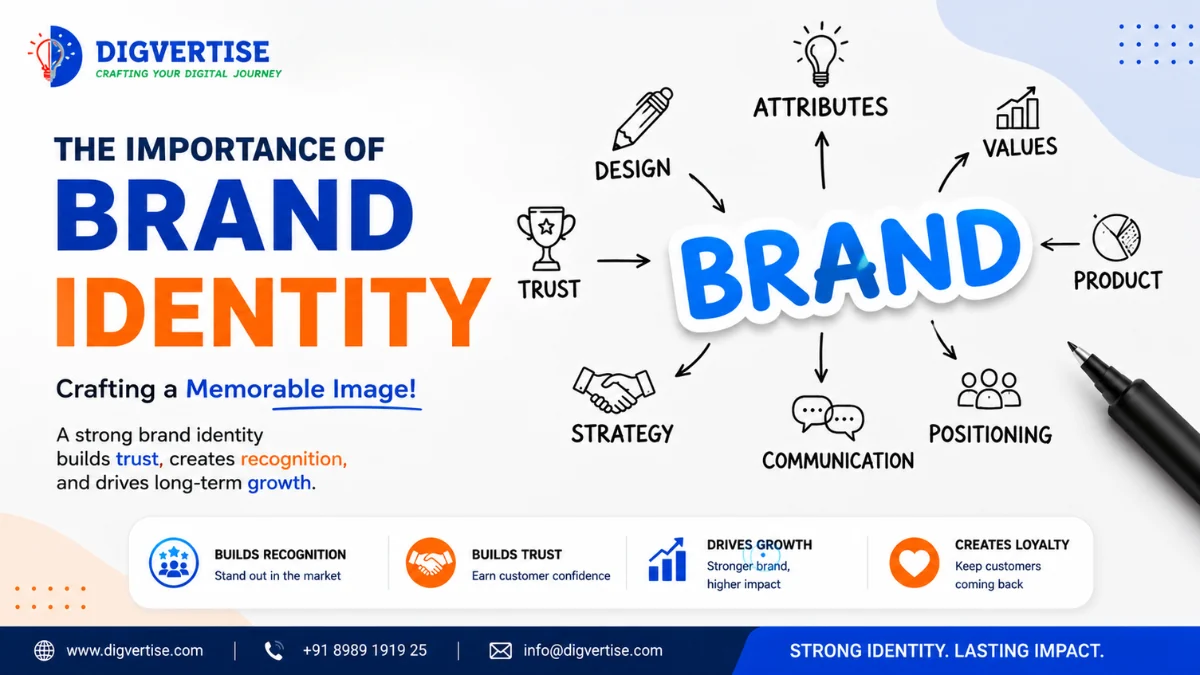
This topic is narrower than brand identity or online reputation management. Brand identity creates recognition; reputation reflects wider perception. Digital trust is the decision layer where a customer evaluates whether the available evidence is coherent enough to make contact.
Trust grows when the business’s claims, identity, experience and actions agree. The best trust signal is not a symbol. It is consistency that a customer can verify. See Why Every Business Needs a Strong Online Presence for the Future for the wider discovery ecosystem around these signals.
Key takeaways
What to remember
- Trust is the combined result of consistent signals.
- Website quality and security support credibility.
- Genuine people, policies and proof show accountability.
- Reviews reveal customer experience and response behavior.
- Clear contact expectations reduce decision risk.
FAQ
Common questions
What makes a website look trustworthy?
Clear business identity, maintained mobile-friendly pages, HTTPS, genuine people, relevant proof, readable policies and dependable contact paths all contribute to trust.
Do customers trust perfect five-star reviews?
Customers often examine recency, detail, patterns and business responses. Credible specific feedback can matter more than a perfect average alone.
Is social media enough to prove a business is legitimate?
No. Social presence can support familiarity, but customers also verify the website, local profile, reviews, contact consistency, policies and evidence.
References
Sources and further reading
- Google: Creating Helpful, Reliable, People-First Content (opens in a new tab)
Official guidance on authorship, sourcing and trust.
- Google Business Profile: Manage Reviews (opens in a new tab)
Official guidance on public review responses.
- web.dev: Why HTTPS Matters (opens in a new tab)
Security and integrity explanation for websites.
Editorial trust
Digvertise Editorial Team
Digvertise Editorial TeamResearch-led practical guidance prepared by the Digvertise editorial team.
- Editorial date
- August 11, 2026