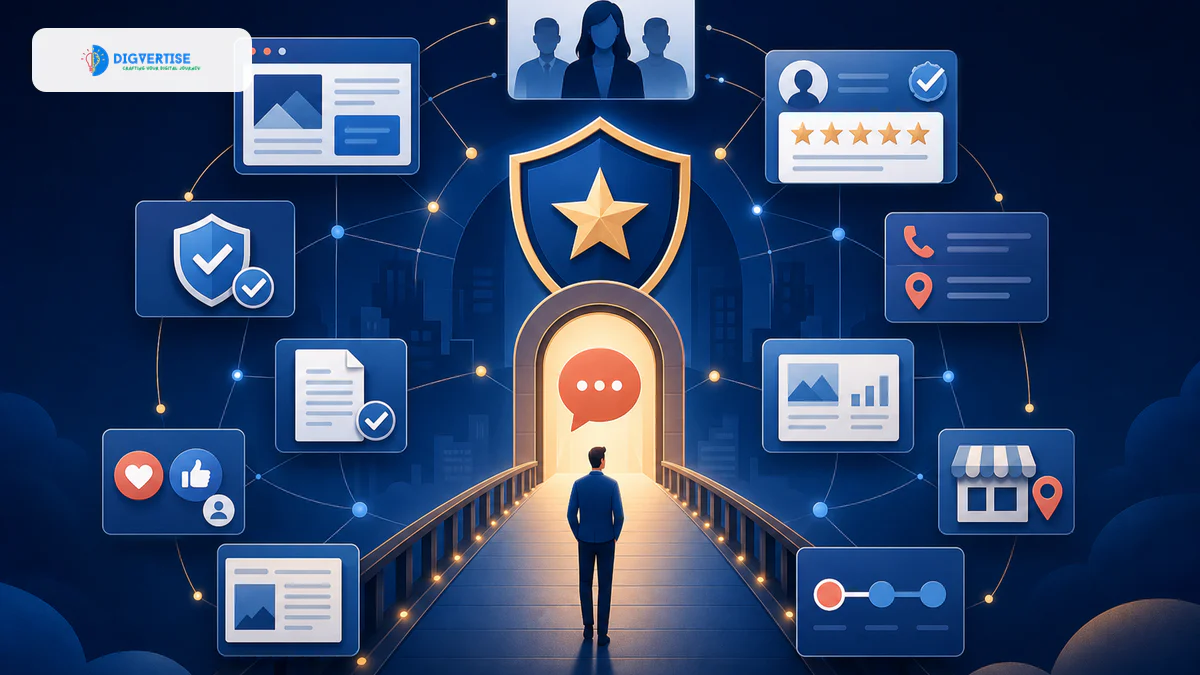


A customer rarely forms an opinion from one page. They may discover a business in search, inspect its map profile, open the website, read reviews, check recent social activity and look for a simple way to call or enquire. Each touchpoint answers part of the same question: is this business real, relevant and easy to deal with?
A strong online presence is the consistent system connecting those touchpoints. It is not a synonym for frequent social media posting. A business can have thousands of followers and still be difficult to find locally, unclear on its own website or inconsistent when a customer tries to contact it.
What a strong online presence includes
| Element | Customer question | Business responsibility |
|---|---|---|
| Website | What do you offer and can I trust you? | Explain services, proof and next steps clearly |
| Search visibility | Can I find you when I need this? | Make useful pages accessible and relevant |
| Local profile | Are you available near me? | Maintain accurate location, hours and contact details |
| Social presence | Are you active and credible? | Share relevant evidence and communication |
| Reviews | What did customers experience? | Earn genuine feedback and respond professionally |
| Action paths | How do I call, book, visit or enquire? | Remove friction from the next step |
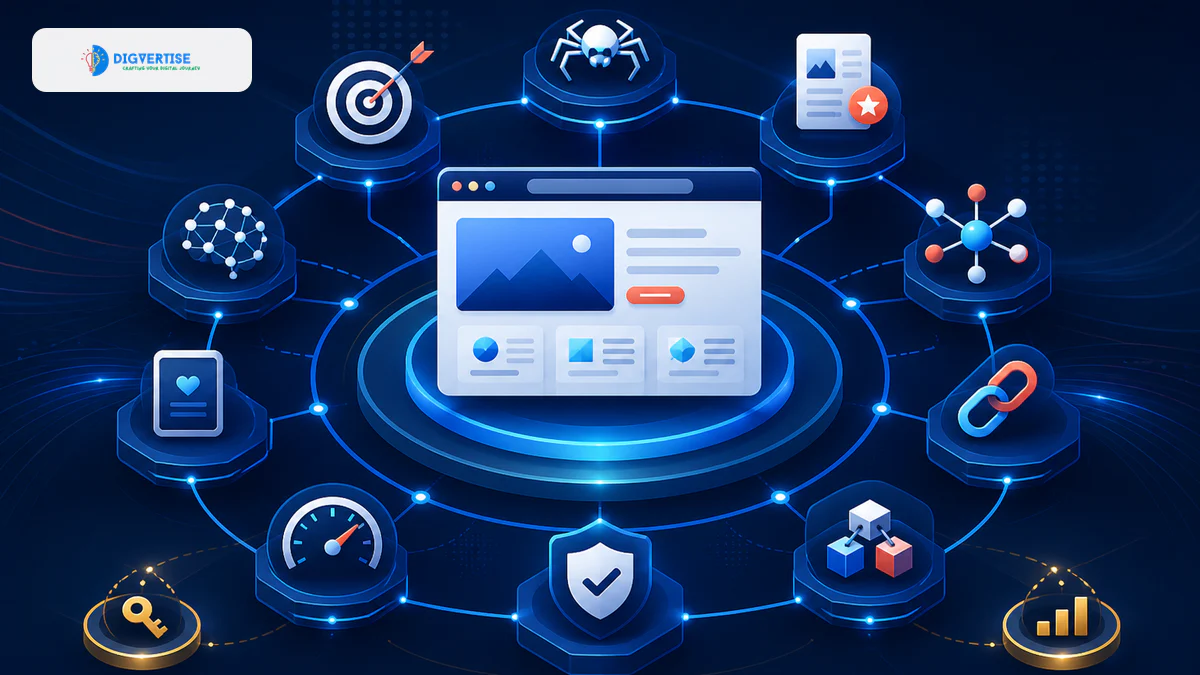
Your website is the owned foundation
Social accounts and marketplace profiles are useful, but the business does not control those platforms. A website is the primary place to explain the offer in full, organize services, publish policies, present evidence and provide clear contact routes. It should work well on mobile, load reliably and make the next step obvious.
The website does not need to be enormous. It needs to answer the questions that prevent a suitable customer from acting: who the service is for, what is included, where it is available, what proof exists and how to begin.
Search visibility connects need with the business
Search visibility means being discoverable when people express relevant intent. It includes ordinary organic results, local results, images, video and AI-assisted search experiences. Visibility is valuable when the page matches the need. Ranking for a broad term that attracts the wrong audience can create traffic without opportunity.
Technical accessibility, useful content, descriptive titles, internal links and a coherent site structure help search systems understand the site. These fundamentals also improve the human journey because visitors can find and interpret information more easily.
Google Business Profile and local presence
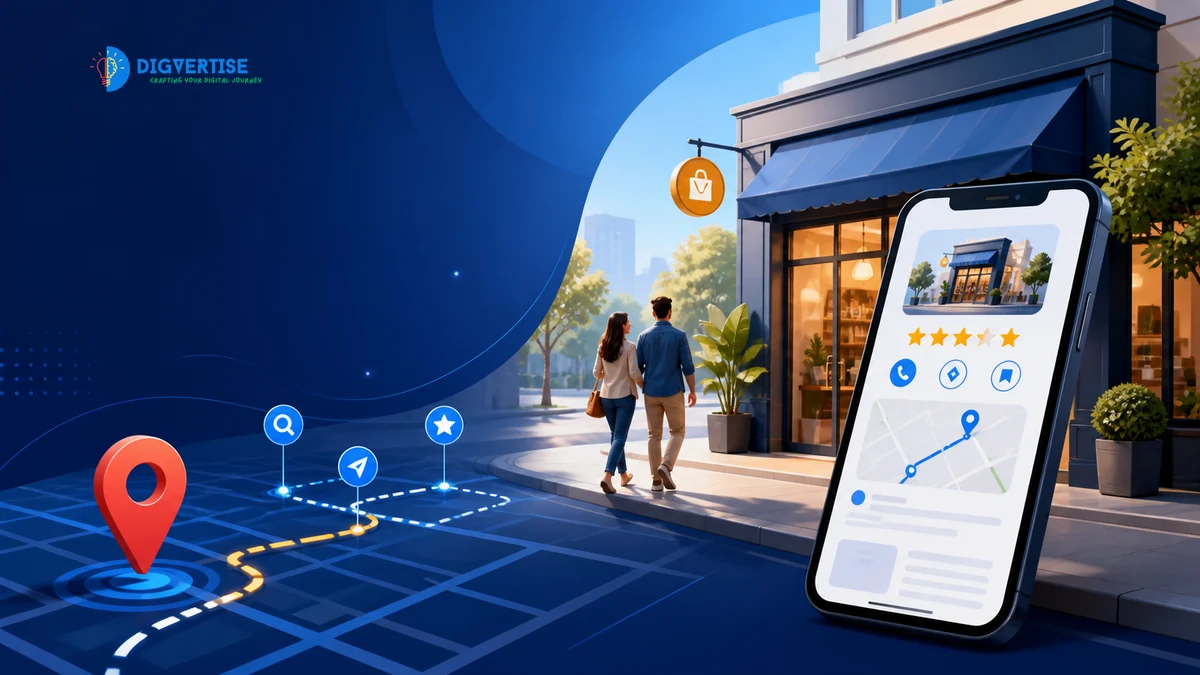
For location-based and service-area businesses, a current Google Business Profile can connect discovery with calls, directions, website visits and other actions. Complete and accurate business information helps customers understand what the business does, where it operates and when it is available. Google says local results are mainly based on relevance, distance and prominence.
The profile should agree with the website and other important listings. A changed phone number, old address or inconsistent name creates friction and doubt. Local presence is not only a ranking task; it is operational information customers depend on.
Social media supports familiarity and proof
Social media can show how the business thinks, works and responds. It can demonstrate products, answer recurring questions, introduce people and maintain familiarity between purchases. The right channel depends on the audience and the type of decision. A B2B manufacturer does not need the same content rhythm as a café or fashion creator.
Posting everywhere without a purpose is not a strong presence. A better approach is to choose channels the audience actually uses, publish material that supports real decisions and connect that attention to an owned destination or clear contact path.
Reviews reduce uncertainty
Reviews help prospective customers understand experiences that the business cannot credibly claim on its own. The content, recency and pattern of reviews matter alongside the average rating. Professional replies can show how the business listens and handles concerns. Review requests should be ethical and based on genuine experiences, never incentives for positive feedback.
Consistency creates recognition and trust
A business name, logo, phone number, location, service description and tone should feel connected across touchpoints. Perfect visual uniformity is not required, but contradictions are costly. If the website describes a premium specialist while the local profile is incomplete and social bio is outdated, customers must work harder to decide what is true.
Clear action paths turn presence into opportunity
Every major touchpoint should support an appropriate action: call, get directions, book, request a quote, message or buy. The action should match the stage of the decision. Someone reading an educational article may need a related guide; someone on a service page may be ready for a consultation. Forcing the same CTA everywhere can feel disconnected.
How to audit your current online presence
- Search the business name and important service categories from a neutral browser.
- Check website usability at common mobile widths.
- Compare name, address, phone and hours across major profiles.
- Review whether service pages answer real decision questions.
- Read recent reviews and assess reply quality.
- Check whether social profiles lead to a relevant destination.
- Test every call, form, booking and messaging path.
- Measure qualified actions, not visibility alone.
A diagnostic such as the Website Growth Analyzer can help identify technical and conversion-readiness issues, but automated checks are only one input. Customer interviews, form data, call quality and real usability testing complete the picture.
Build the system in the right order
Start with accurate identity and contact information. Strengthen the website and action paths. Improve discoverability in search and local results. Add channel-specific content that supports the customer journey. Earn and respond to genuine reviews. Finally, connect measurement so the team can see which touchpoints contribute to useful enquiries or sales.
Different businesses need different presence priorities
A local clinic should prioritize accurate location, hours, services, practitioner information, appointment routes and trustworthy reviews. An ecommerce brand needs product discovery, merchandising, delivery and return information, payment confidence and post-purchase support. A B2B manufacturer needs clear capabilities, industries served, technical evidence and a dependable enquiry process. Copying another company’s channel mix without its customer context creates activity rather than presence.
The same principle applies to geography. A neighbourhood service business may gain more from a strong local profile and location pages than from a national content campaign. A remote consultancy may need expert articles, founder visibility and referral proof. Start where customers verify and act, not where the latest marketing discussion is loudest.
Presence also requires ownership
Every important touchpoint should have an internal owner. Someone must update holiday hours, review form delivery, respond to profile questions, renew domains and approve changes to core business facts. Shared access should be secured, documented and recoverable. A profile that only a former employee can access is an operational risk.
Create a simple register containing the platform, public URL, owner, recovery method, last review date and key information source. This is not glamorous work, but it prevents contradictions and reduces dependence on individual memory.
Content should connect the ecosystem
One useful piece of content can serve several touchpoints without being copied mechanically. A detailed website guide can become a short social explanation, a sales follow-up resource and an answer linked from a local profile. The central facts remain consistent while the format adapts to the channel and audience stage.
This approach is more sustainable than treating every channel as a separate content factory. It also creates a clearer path back to the owned website, where the full explanation and action can live.
How to measure the whole journey
Channel dashboards tend to claim credit individually. A customer journey is less tidy. Someone may discover a Reel, search the brand later, read reviews and finally call from the website. Use analytics and campaign data where available, but also ask leads how they found the business and review assisted paths. The objective is useful directional learning, not perfect attribution.
A monthly presence review can combine visibility, accuracy, trust and action metrics: indexed pages, relevant queries, local actions, review themes, profile visits, form success, qualified calls and sales feedback. Sudden changes deserve investigation, but not every fluctuation requires a new strategy.
What a future-ready presence is not
- It is not opening an account on every new platform.
- It is not publishing high volumes of generic content.
- It is not buying reviews or followers.
- It is not replacing customer service with automation.
- It is not redesigning constantly without fixing accuracy and action paths.
- It is not measuring success through impressions alone.
The future does not require a business to appear everywhere. It requires the business to be coherent where customers look. A smaller, dependable presence usually creates more trust than a wide collection of neglected profiles.
Key takeaways
What to remember
- Online presence is a connected customer system.
- A website provides the owned source of truth.
- Search, local and social channels serve different discovery roles.
- Reviews and consistent facts reduce uncertainty.
- Action paths and qualified outcomes matter more than channel count.
FAQ
Common questions
Is an online presence the same as social media?
No. Social media is one part of an online presence, which also includes the website, search visibility, local profiles, reviews, business identity, trust signals and customer action paths.
What should a small business improve first?
Start with accurate business details, a clear mobile-friendly website or landing page, a complete local profile where relevant and one dependable contact path.
How can a business measure its online presence?
Track discoverability together with qualified actions such as calls, direction requests, bookings, form submissions, sales and assisted conversions.
References
Sources and further reading
- Google Business Profile: Improve Local Ranking (opens in a new tab)
Official guidance on complete information and local ranking factors.
- Google Search Essentials (opens in a new tab)
Technical and content foundations for Search eligibility.
Editorial trust
Digvertise Editorial Team
Digvertise Editorial TeamResearch-led practical guidance prepared by the Digvertise editorial team.
- Editorial date
- July 29, 2026