

If you are a fresher in 2026, you have probably heard some version of this: AI is taking entry-level jobs. Your seniors say it, social media says it, and some days the job portals seem to agree.
The real picture is more complicated, and more useful. Some kinds of entry-level work really are shrinking. Other kinds are growing, and the way companies hire graduates is changing. Panic will not help you choose. Understanding what is actually moving will.
What the numbers actually say
- Only about 15,000 of India's 1.19 lakh active tech openings in March 2026 were entry-level roles for people with up to two years of experience, about 10% fewer than a year earlier, according to staffing firm Xpheno's Active Tech Jobs Outlook reported by CIOL (opens in a new tab).
- At the same time, a Nomura report covered by Business Today (opens in a new tab) counted about 83,100 AI-related hires in India against about 31,900 AI-linked layoffs and exits in the corporate cases it tracked (not a count of the whole job market): roughly 2.6 hires for every role lost. It also warned that the gains go mostly to people who already have the skills.
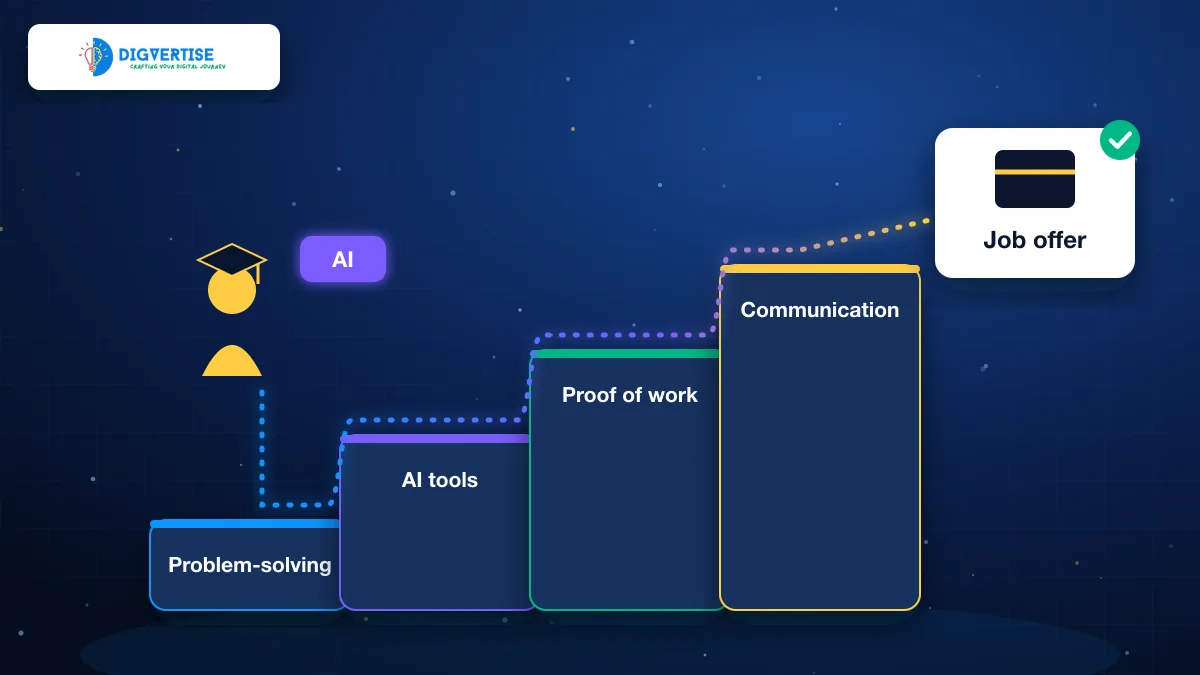
- In the Unstop Talent Report 2026 (opens in a new tab), 49% of more than 500 HR leaders named problem-solving as the most critical future skill, and 39% put AI and machine learning at the top.
- An October 2026 opinion piece in The Week (opens in a new tab) by a staffing-industry executive, citing Deloitte and LinkedIn data, describes a graduate market that is being sorted differently rather than simply shrinking: AI now screens many applications, and internships increasingly work as trial periods.
Both stories are true at once. Routine roles are under pressure, and new roles are appearing for people who can work with AI and prove it. The question is not whether there are jobs. It is which fresher profile gets chosen.
Which entry-level work is under pressure
The work most exposed is repetitive and easy to describe in a checklist: basic coding tasks, routine testing, first-level support, simple data entry and generic content writing. AI tools can now draft much of that quickly. That does not make these skills useless, but it means a CV that only lists them looks the same as thousands of others.
What is harder to automate is judgement: understanding a messy problem, choosing what matters, checking whether an AI answer is actually right, and explaining the result to a person who has to make a decision.
| Then | Now |
|---|---|
| A degree and a list of courses | A degree plus visible proof of real work |
| Knowing a tool | Using tools, including AI, to solve a specific problem |
| Waiting for campus placement | Using projects and internships as auditions |
| Generic CV for every job | A short portfolio aimed at one field |
| Avoiding AI to look original | Using AI openly and showing your own judgement on top |
My advice: build proof, not just certificates
1. Learn to work with AI, not only about AI
Watching tutorials about AI is not the same as using it. Pick one real task, such as researching a market, writing a first draft, cleaning a spreadsheet or analysing a website, and do it with an AI assistant. Then do the most valuable part yourself: check the output, fix what is wrong and explain why. That checking is one of the skills employers are increasingly paying for.
2. Choose one direction and go deep
Marketing, data, design, operations, sales, software: you do not need to master all of them. Choose one field that interests you and learn its fundamentals properly. Depth in one area, with AI as your assistant, beats shallow knowledge of twenty tools.
3. Build three small, real projects
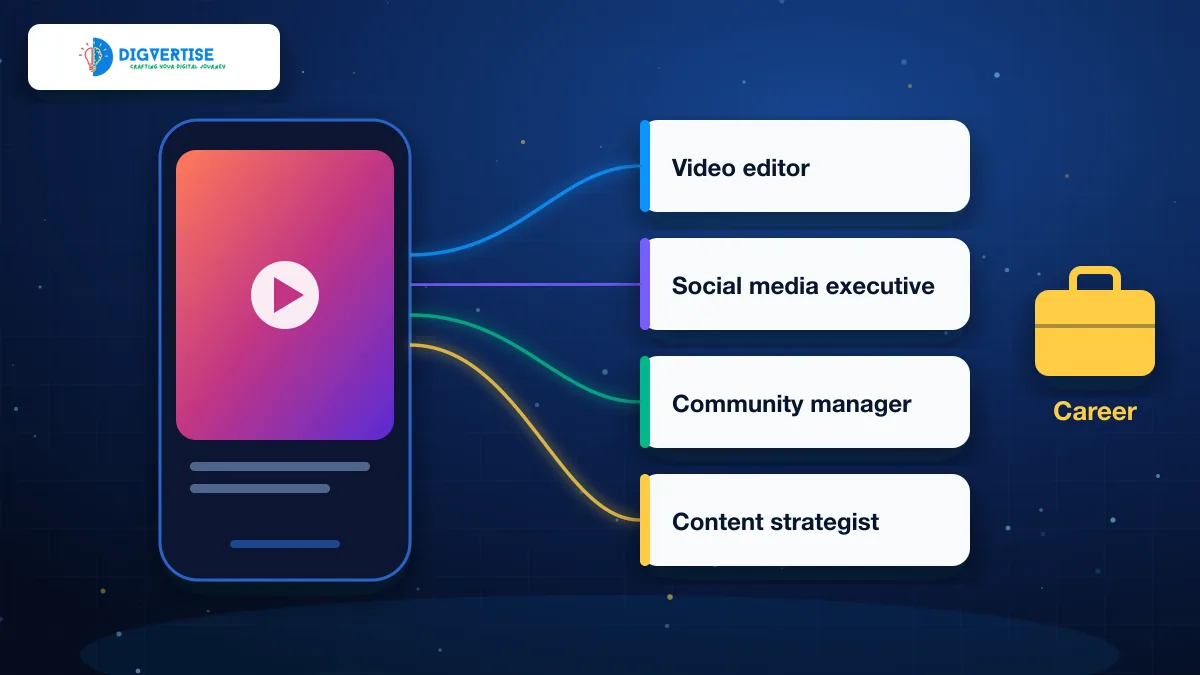
Real projects beat practice exercises. Improve a local shop's Google Business Profile and record what changed. Build a simple sales dashboard for a family business. Write, post and measure five short videos for a cause you care about. Small, finished and measured is far more convincing than big and imaginary.
4. Communicate clearly
Problem-solving only counts when someone understands your solution. Practise writing short, clear summaries and explaining your work in a few minutes, in English and in the language your clients or colleagues think in. Clear communication is one of the hardest things for AI to fake on your behalf.
5. Treat every internship as an audition
Companies increasingly use internships to decide whom to hire. Ask what success looks like in the first month, deliver something visible, and ask for feedback. A strong internship can be worth more than a dozen cold applications.
A 90-day plan you can start this week
- Days 1 to 30: choose your field, learn its basics and use an AI assistant every day on real tasks. Keep notes on what it gets wrong.
- Days 31 to 60: complete two small real projects. Measure something in each: time saved, enquiries, views, errors fixed.
- Days 61 to 90: put the projects on one simple page or LinkedIn post with before-and-after results, then apply for internships and jobs in that one field.
A note for parents
Degrees and college names still matter in India; that has not disappeared. But each year, employers look harder at what a young person can actually do. If your son or daughter spends evenings building small projects instead of only collecting certificates, that is not a distraction. It may be the most valuable part of their education.
Do not compete with AI on speed
You will not out-type an AI tool, and you do not need to. Compete on judgement, curiosity, communication and responsibility. Use AI to go faster, and use your own mind to go in the right direction.
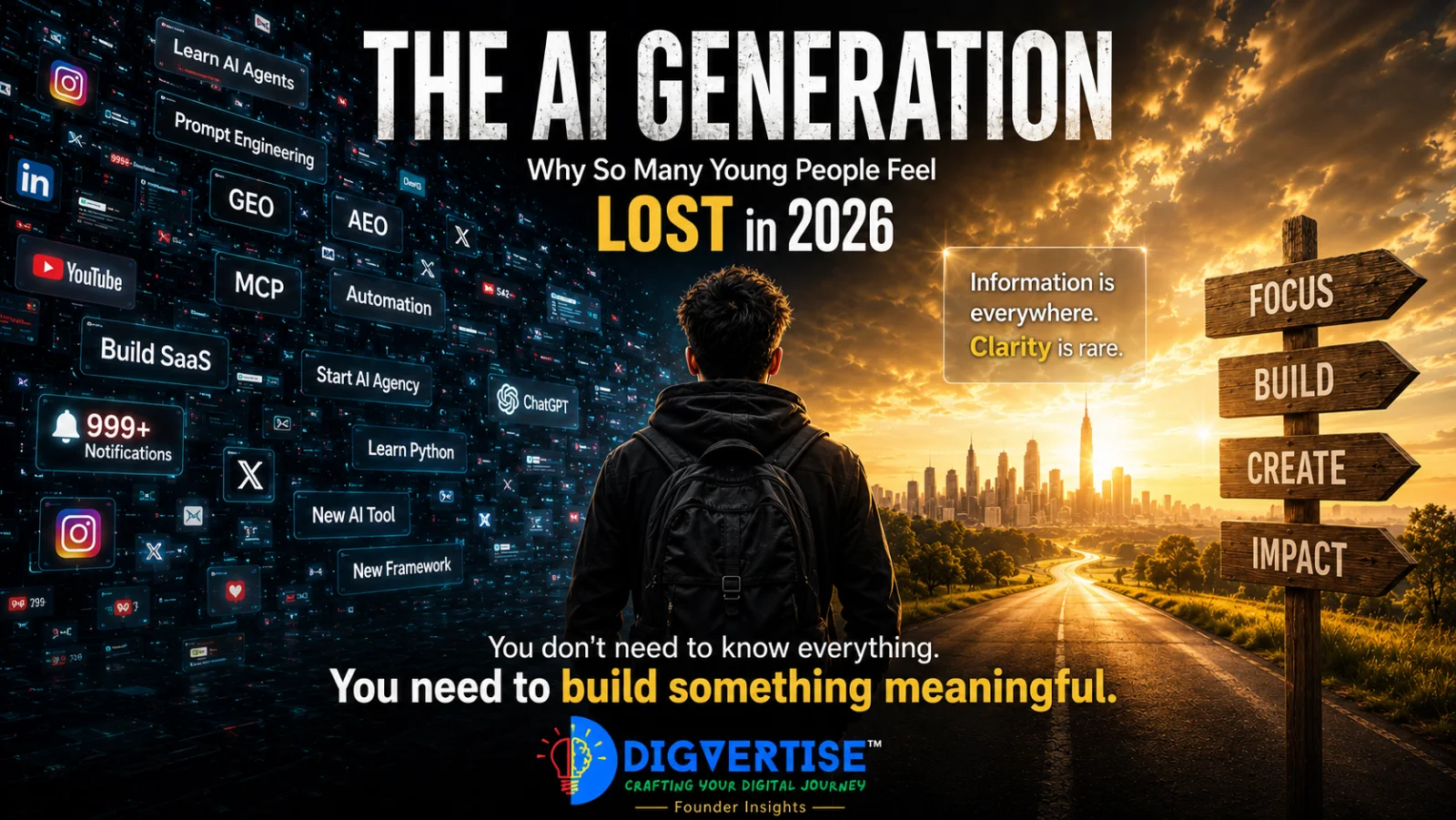
I wrote earlier about why many young people feel lost in the AI era. The way out is the same: less noise, one direction, and steady proof that you can solve real problems.