
Social Media Marketing That Turns Attention Into Customer Trust.
Social media marketing helps your business stay visible, earn customer trust, and remain memorable through consistent content, meaningful conversations, and clear brand communication.
- Content with purpose
- Consistent presence
- Meaningful reporting
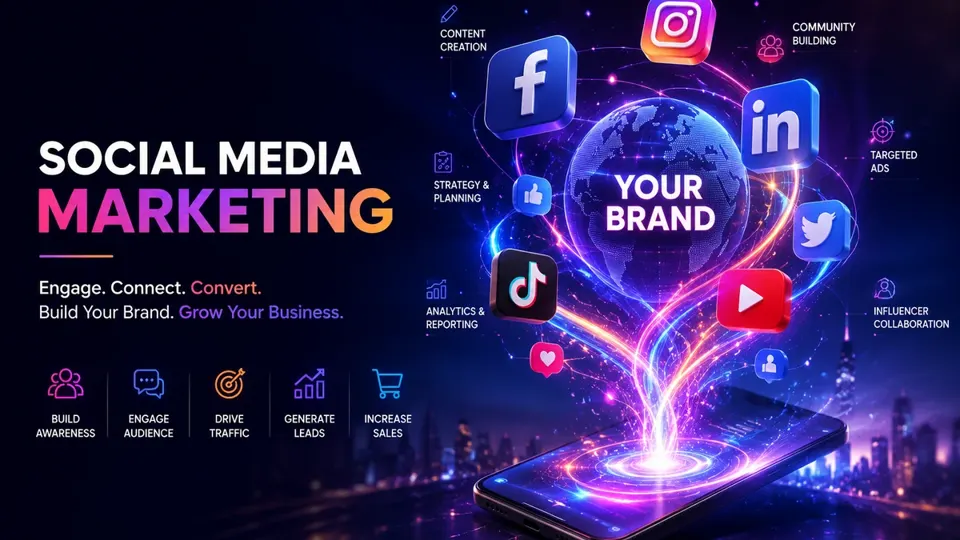
What it is
What is Social Media Marketing?
Social media marketing is the planned use of content, community interaction and paid distribution to shape how people encounter and understand a brand. It connects platform behaviour, audience needs, creative direction and a consistent publishing rhythm instead of filling a calendar with disconnected posts.
A business should consider it when customers research through Instagram, Facebook, LinkedIn or YouTube, when brand recognition is weak or when launches and sales activity need regular support. The channel earns value by building familiarity and useful conversation, with clear roles for awareness, trust, response and action.
- Purposeful content planning
- Consistent brand presence
- Audience signals that inform decisions
Why it matters
Why Social Media Marketing Matters
Social media marketing gives a business a consistent place to explain its work, respond to customers and stay familiar between buying moments. Long periods of silence can weaken recognition and leave others to shape the conversation around the market.
- 01
Stay recognisable
A consistent social presence helps customers remember the business when a relevant need appears.
- 02
Answer in public
Useful posts and replies resolve common questions where prospective customers can see them.
- 03
Read audience signals
Comments and content response reveal which concerns, ideas and formats deserve closer attention.
- 04
Support buying moments
Planned communication keeps launches, offers and customer proof visible when decisions are being made.
This train's route
Five stations. One destination.
We define who the business needs to reach, what those people need to understand and how each channel can support that conversation.
- Understand
Understand the audience, brand voice and business role of each priority social channel.
- Identify
Identify the questions, themes and moments where useful communication can build familiarity.
- Plan
Plan a sustainable content rhythm around customer needs and internal production capacity.
- Execute
Execute purposeful publishing, community responses and campaigns with consistent direction.
- Improve
Improve the programme using audience response, conversation quality and business relevance.
Why Digvertise
Why Choose Digvertise for Social Media Marketing?
- 01
Purpose before posting
Every content theme is given a clear role in helping customers understand, remember or interact with the business.
- 02
Channels keep their context
Ideas are adapted to audience behaviour on each priority platform instead of publishing the same message everywhere.
- 03
The rhythm stays workable
Content plans respect approval time and production capacity so the business can communicate consistently without exhausting its team.
Check the Website Behind Your Social Traffic
Website Growth Analyzer examines what happens after someone leaves a social platform and reaches the business website. It reviews campaign continuity, brand consistency, mobile entry points and next steps, helping the team decide whether content distribution or the destination experience needs attention first.
- Campaign continuity
- Brand consistency
- Mobile entry points
- Customer next steps
Connecting trains
Or this train may fit better.
Social Media Marketing may be the right priority, or the business may need a related service first. Use the decision guidance below to compare the practical role of each option.
-
DV-302 · CREATOR SPECIAL
Influencer Marketing
Choose influencer marketing when creator credibility can explain or demonstrate the offer effectively.
Perfect for: Consumer brands · Product launches · Trust-led campaigns -
DV-303 · NEWSLETTER MAIL
Email Marketing
Choose email marketing when leads or customers need relevant follow-up across a longer journey.
Perfect for: Lead-generation teams · Ecommerce stores · Customer retention
Questions business owners ask
Enquiry window
Which social platforms should our business actually use?
Choose platforms by customer behaviour and communication fit, not by popularity. A professional service may find stronger conversations on LinkedIn, while a visual consumer product may need Instagram or YouTube. The business also needs enough capacity to publish and respond consistently. It is usually better to serve one or two relevant channels well than maintain several inactive accounts. We would review audience, content strengths and commercial purpose before recommending the mix.
How much social content does a business need each month?
There is no useful standard number. Frequency should reflect the role of the channel, the quality of available ideas and the team's ability to produce and approve work. A smaller, consistent programme with clear themes often performs better than a crowded calendar filled with weak posts. The plan should also leave room for customer questions, timely business updates and learning from response, rather than treating every publishing slot as a fixed production target.
Should we invest in organic social content or paid social campaigns first?
Organic content helps establish the message, brand presence and audience response that paid campaigns can later amplify. Paid social is useful when the business has a defined audience, offer and destination that can be measured. If the brand has little credible content, advertising may struggle to build confidence after the first click. The right sequence depends on urgency and existing assets, but both should share one communication strategy rather than operate as separate activities.
Come to the platform
Planning a More Useful Social Presence?
Tell us which customers and conversations matter to the business. We can discuss the channels, content rhythm and campaign role that make practical sense.