Every minute, millions of Google searches are conducted globally. Potential clients open their browsers and type queries looking for solutions to their problems. They search for a chartered accountant in their city, a local dental clinic, a B2B parts manufacturer, or a digital service provider. If your business does not rank organically for these searches, you do not exist for a massive segment of your target audience.
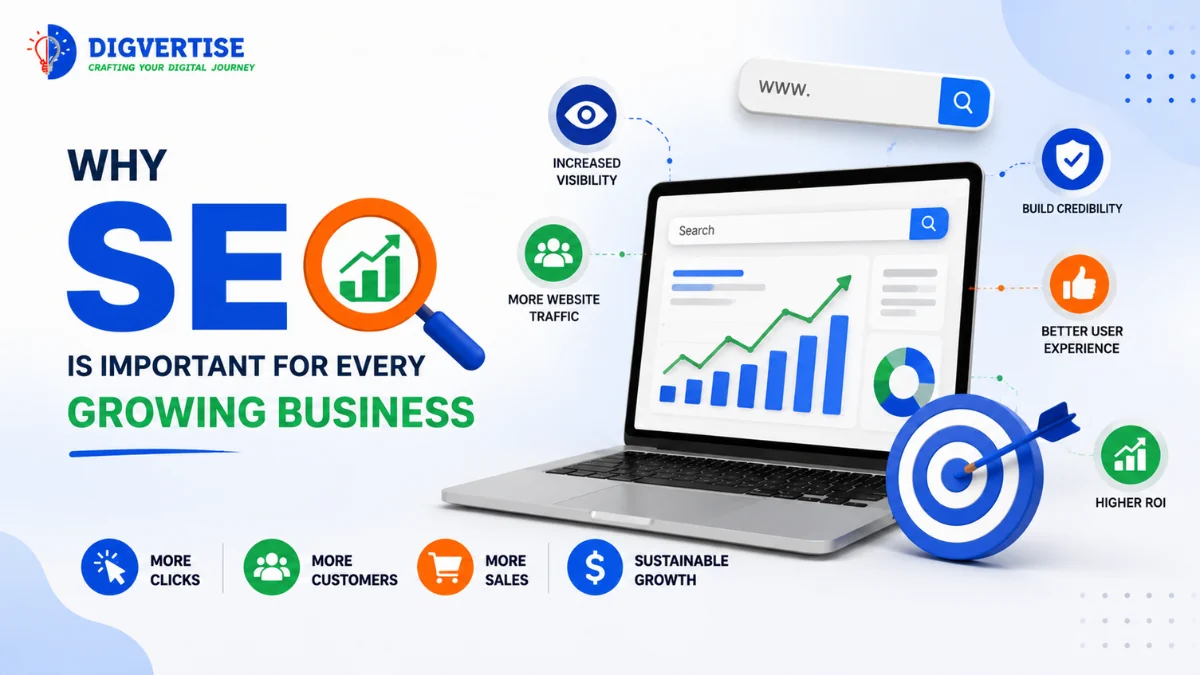
Organic search engine optimization (SEO) is not a vanity marketing project. It is a critical long-term business asset. Unlike paid advertising, where your traffic disappears the moment you stop paying, organic search rankings build a compounding asset that drives consistent, high-intent traffic to your website for months or years. Investing in your search visibility is the most cost-effective way to lower customer acquisition costs and scale your business.
At Digvertise, we look at search engine optimization through a practical business lens: keyword commercial intent, page speed parameters, mobile responsiveness, and database lead conversions. We don't believe in keyword stuffing or thin content. We believe in building search engine authority that translates to qualified enquiries. By aligning your organic strategy with conversion design, you build a resilient customer acquisition channel.
Many business owners assume they need heavy ad budgets to stay visible. In reality, they often need better search indexing and local directory alignment. This guide explains why SEO is important for every growing business and provides a detailed framework to optimize your site.
What Search Engine Optimization Actually Means
Search Engine Optimization (SEO) is the process of optimizing your website layout, code, and content to rank organically on search engine results pages (SERPs) for relevant queries. It involves technical optimization (speed and indexability), on-page content alignment (answering user intent), and authority building (reviews and backlinks).
For example, when a prospect runs a scan using our Online Business Score tool, they receive a detailed report mapping their local coordinates, address structure, and map citations across the web. This validation of your location data is what tells Google you are a real, reliable business operating in that area.
Why Generic SEO Hacks Fail
Most businesses waste time on outdated SEO tricks. They buy backlink packages from unverified networks, repeat target keywords ten times on a page, or publish hundreds of short, thin, AI-generated blog posts. What they discover is that search engine spiders ignore their pages, or worse, Google filters penalize their domain.
Modern search engines prioritize informative density, user experience, and entity trust. If your website takes five seconds to load, has overlapping text on mobile screens, or lacks clear contact forms, search engines will reduce your ranking score. Growth rarely slows because of lack of demand. It usually slows because operations and digital platforms are not aligned to capture and satisfy user intent.
The Digvertise SEO Compound Framework™
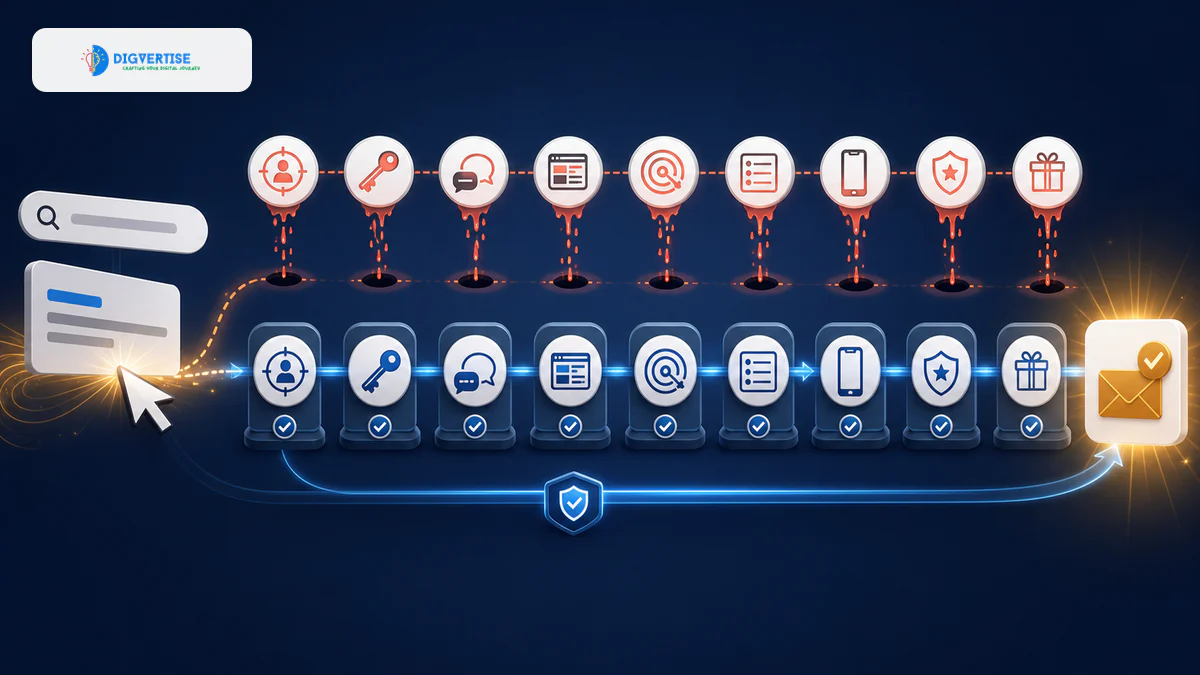
Based on our experience helping CA firms, local showrooms, clinics, and B2B manufacturers build search engine authority, we developed the proprietary Digvertise SEO Compound Framework™. This framework outlines a 5-level path to search page dominance:
- Level 1 - Core Technical Foundation: Improve loading speed, compress images, and fix mobile usability. Use the Website Growth Analyzer to establish a clear technical baseline.
- Level 2 - Semantic Content Mapping: Write deep, answer-ready guides that address specific customer pain points. Avoid keyword stuffing and focus on providing structured tables, lists, and checklists.
- Level 3 - Trust Citation Network: Build directory listings and map consistency. Correct address mismatches across Justdial, Sulekha, and Facebook as explained in our Google Business Profile Optimization guide.
- Level 4 - Conversion Architecture Sync: Align search landings with clear above-the-fold CTA placement, clean typography, and simple forms to convert incoming traffic into enquiries.
- Level 5 - Lead Handoff & Tracking: Route incoming organic leads instantly to your sales team using Growth Automation Services. Monitor search reports and click data in a unified database.
Organic Search Rankings vs Paid Ad Campaigns: A Comparison
To help you allocate your marketing budget, let's compare the characteristics of organic search rankings versus paid advertising campaigns:
FeatureOrganic Search SEOPaid Ad Campaigns (PPC)Traffic SourceFree organic clicks (compounding asset)Paid sponsor clicks (requires ongoing ad spend)Launch TimelineRequires 3 to 6 months to establish rankingsInstant visibility within hours of activationTraffic StabilityHighly sustainable (continues even if budget is paused)Stops instantly when daily budget is consumedCompounding ValueHigh (traffic grows over time while cost falls)None (every visitor has a recurring click cost)CredibilityHigh (searchers skip ads to click organic results)Moderate (clearly marked as sponsored placements)
Core Pillars of Organic SEO
If you want to build search authority, focus on these three core pillars first:
Pillar 1: Technical Performance and Speed: Search engines prioritize websites that load quickly and look crisp on mobile viewports. Bloated JavaScript code, uncompressed images, and layout shifts will lower your rankings. Keep your site secure with active SSL certificates and clean sitemaps.
Pillar 2: Deep Informative Content: Google's algorithms analyze content density. A page that answers a query with deep insights, structured comparison tables, and checklists will rank higher than a thin, generic page. Answer customer questions directly using natural business language.
Pillar 3: Geographic Trust Signals: If you serve a physical location, local directories and coordinates consistency determine your visibility. Ensure your Name, Address, and Phone (NAP) details match exactly across all networks.
Automation should never replace relationships. It should remove repetitive work so your team can spend more time with customers. Set up automated confirmation messages so that when an organic search lead arrives, your team is notified instantly.
Common SEO Mistakes to Avoid
Avoid these common errors to protect your domain authority:
Targeting broad keyword queries: Optimizing for generic terms like 'business tips' instead of commercial terms like 'tax consultant Pune'.
Inconsistent address spelling: Using different NAP formats across your directories, which confuses search engine crawlers.
Cross-check NAP consistency across Google Maps, social media, and local search trust coverage.
Neglecting website loading speed: Adding heavy visual assets without compression, causing mobile visitors to bounce.
Blocking search crawlers: Configuring robots.txt to block search engine bots from indexation.
Illustrative Example
Illustrative Example - not a real client
Consider a local boutique hotel in Lonavala. The hotel had beautiful rooms but relied entirely on third-party aggregators (like booking portals) for bookings, paying high commission rates. Their website got zero organic traffic because it only contained a few photos and a contact page with no local guides or service lists.
The hotel owner decided to build organic search authority. They optimized their page speeds, updated their Google Maps listing, and resolved directory discrepancies. They wrote detailed local guides targeting search terms like 'best places to visit in Lonavala for couples' and 'pet friendly weekend resorts Lonavala'.
They placed a prominent 'Book Directly & Save 10%' button in the header and simplified their reservation forms. Within six months, their guides began ranking on page one, driving direct bookings to their website for free. The hotel reduced aggregator commission payouts, improving booking profit margins, showing the compounding value of SEO.
Actionable SEO Checklist
- Use this checklist to audit your search engine optimization status:
- Submit XML Sitemap: Verify sitemap is submitted in Google Search Console.
- Fix Crawl Errors: Check your console monthly for indexation issues.
- Audit Page Speeds: Confirm mobile speed scores are over 80.
- Update Metadata: Ensure title and description tags contain primary keywords.
- Fix Address Discrepancies: Ensure identical spelling across all local directory listings.
- Optimize Mobile Layouts: Ensure text sizes are readable without zooming.
- Add Internal Links: Connect related blogs to your primary service pages.
- Display Client Testimonials: Share reviews on your service landing pages.
- Track Conversion Source: Setup database logs to check where enquiries come from.
Conclusion
Most businesses don't need complicated setups. They need clarity. The first step is understanding where your search rankings slow down, where forms confuse visitors, and where unoptimized layouts block conversions. Upgrading your organic search authority is the foundation of digital credibility.
Key takeaways
What to remember
- Every minute, millions of Google searches are conducted globally. Potential clients open their browsers and type queries looking for solutions to their problems. They search for a chartered accountant in their city, a local dental clinic, a B2B parts manufacturer, or a digital service provider. If your business does not rank organically for these searches, you do not exist for a massive segment of your target audience.
- Organic search engine optimization (SEO) is not a vanity marketing project. It is a critical long-term business asset. Unlike paid advertising, where your traffic disappears the moment you stop paying, organic search rankings build a compounding asset that drives consistent, high-intent traffic to your website for months or years. Investing in your search visibility is the most cost-effective way to lower customer acquisition costs and scale your business.
- At Digvertise, we look at search engine optimization through a practical business lens: keyword commercial intent, page speed parameters, mobile responsiveness, and database lead conversions. We don't believe in keyword stuffing or thin content. We believe in building search engine authority that translates to qualified enquiries. By aligning your organic strategy with conversion design, you build a resilient customer acquisition channel.
FAQ
Common questions
Why is SEO critical for small businesses?
SEO is critical because it builds a compounding customer acquisition asset. Instead of paying for every visitor using ads, organic search traffic is free. Once your primary pages rank, you generate leads without recurring advertising costs, which improves business margins.
How long does it take to rank on page one of Google?
For most businesses, meaningful ranking movement takes three to six months. Keyword competitiveness, domain age, and local coordinates influence this timeline. Local service niches often see improvements faster than competitive B2B software fields.
What is the difference between SEO and Google Ads?
SEO focuses on ranking pages organically for free search traffic, which takes time but builds long-term value. Google Ads provides instant sponsored placements at the top of results, charging you for every click. Read our [Google Ads vs SEO](/google-ads-vs-seo-which-is-better-for-your-business/) guide to learn more.
How does local citation consistency affect rankings?
Citation consistency is a major local ranking factor. If search engine spiders crawl directories and find different address spelling formats or telephone numbers for your business, they reduce your ranking score. Keep details identical across all networks.
Should I write short or long blog posts for SEO?
Focus on value and completeness rather than word counts. A guide that answers a customer's query completely, using structured tables, checklist items, and expert quotes, will rank higher than multiple short, repetitive posts. Focus on quality.
How do I check if my website is optimized for mobile?
Test your website on real mobile viewports. Check if text sizes are easy to read, menus are easy to expand, and contact forms fit the screen. You can check your digital status using our [Online Business Score](/business-online-presence-score/) tool.
What is XML sitemap, and why is it important?
An XML sitemap is a document that lists all your website pages for search engine crawlers. It acts as a roadmap, telling search engines which pages to read and index. Submitting a clean sitemap ensures all your service guides are crawlable.
Can growth automation work for businesses with fewer than five employees?
Yes. Small businesses benefit the most because automation reduces repetitive administrative work - like manually copy-pasting lead details. It ensures that every lead captured is followed up instantly without hiring extra staff.
Editorial trust
Digvertise Team
Digvertise editorial teamPractical digital marketing guidance prepared by the Digvertise Team.
- Published
- April 16, 2026