Many marketing campaigns treat paid ads and organic search as separate strategies, managed by different teams with different budgets. However, the most successful digital systems integrate both channels. Running organic search optimization and paid search campaigns together builds search engine authority, lowers overall client acquisition costs, and helps you dominate search engine results. This guide details how to run SEO and Google Ads together to capture search dominance.
At Digvertise, we build connected digital systems. When your Google Ads campaigns and organic SEO pages work together, they share keyword data, increase Quality Scores, and build trust. By capturing prospects at both the research and purchase stages, you double your brand's search page real estate and turn search intent into real business enquiries.
Many business owners assume they must choose between organic optimization and paid ads. In reality, they need both to build a resilient marketing channel. When you run both campaigns together, you reduce your dependency on any single source and protect your lead flow from search engine algorithm updates or ad price spikes.
What Search Synergy Actually Means
Search synergy is the practice of coordinating your paid search advertisements with your organic search engine optimization to maximize visibility and conversion. It means using real-time keyword conversion data from Google Ads to write targeted organic content, and using technical SEO optimizations to lower paid click costs.
For example, when a prospect runs a check on our Online Business Score tool, they receive a detailed audit. If we target this tool using Google Ads bidding on terms like 'audit my local SEO' while ranking organically for terms like 'online presence score checker', we capture searchers at both stages of intent. This combined approach drives high-quality leads to our CRM database.
Why Separating Ads and SEO Blocks Growth
Treating paid search and organic search as isolated channels causes waste. If your SEO team writes content based only on search volumes without checking which keywords drive actual enquiries in Google Ads, they waste months writing guides that do not convert. Similarly, if your ads team bids on keywords without optimization, they pay high click fees.
When you send paid traffic to slow, unoptimized landing pages that lack mobile layout testing, visitors bounce before your contact forms load. You pay for clicks that do not convert. Growth rarely slows because of lack of demand. It usually slows because operations and marketing funnels are disjointed. Integrating both channels solves this problem.
The Digvertise Search Synergy Model™
To help service businesses and B2B manufacturers dominate search engine rankings, we developed the proprietary Digvertise Search Synergy Model™. This model outlines a 5-stage path to search market dominance:
Stage 1 - Search Query Share: Extract real-time search term reports from your paid ads monthly. Identify keywords with high conversion rates and immediately optimize organic content for those terms.
Stage 2 - Quality Score Optimization: Apply technical SEO and performance fixes to your landing pages. Use the Website Growth Analyzer to identify mobile instability and speed issues that can make paid traffic less efficient.
Stage 3 - Search Real Estate Dominance: Rank both paid advertisements and organic listings for high-converting commercial terms, establishing your brand as the market leader.
Stage 4 - Retargeting Funnel Mapping: Capture early-stage research traffic organically through helpful guides, and use Google Ads retargeting to show booking ads to those past visitors.
Stage 5 - Centralized CAC Attribution: Log organic and paid search leads in a centralized CRM database. Calculate combined customer acquisition costs to balance your marketing budgets.
Organic Search SEO vs Google Ads (PPC): A Comparison
To help you understand how these channels complement each other, let's compare their core parameters:
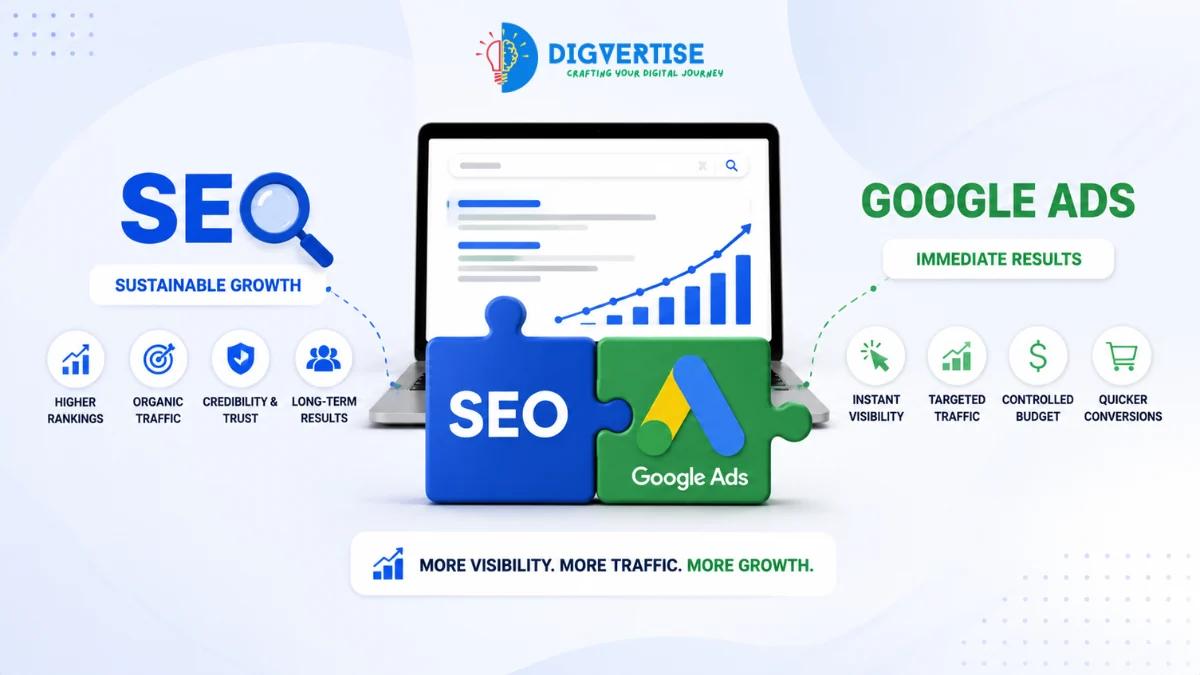
FeatureOrganic Search SEOGoogle Ads (Paid PPC)Traffic CostFree organic clicks (compounding asset value)Pay per click (requires ongoing marketing budget)Visibility TimelineRequires 3 to 6 months of optimization to rankInstant visibility within hours of campaign launchKeyword TestingSlow (requires months to see ranking impact)Instant (gather search term volume and CTR within days)Page AuthorityHigh (searchers trust organic results over ads)Moderate (clearly marked as sponsored search ads)Budget DependencyLow (rankings continue even if budget is paused)High (ad visibility stops instantly when budget is paused)
Core Pillars of Integrated Search
If you want to run Google Ads and SEO together successfully, focus on these three core pillars first:
Pillar 1: Shared Landing Page Optimization: A high-converting landing page must satisfy both search engine algorithms and paid ad Quality Scores. Optimize your page layout, use professional Google Fonts to keep text readable, compress images to keep page load speed fast, and simplify forms.
Pillar 2: Keyword Portability: Google Ads is a rapid testing ground. If you find that a keyword like 'growth automation for small businesses' has a high conversion rate in Google Ads, write a detailed organic guide for that query. Use paid data to de-risk your content investment.
Pillar 3: Retargeting Funnel Design: Capture informational searchers with organic SEO articles. Once they visit your site, use Google Ads remarketing lists to display targeted booking offers. This combined strategy reduces average lead acquisition costs.
Automation should never replace relationships. It should remove repetitive work so your team can spend more time with customers. Set up automated confirmation replies so that when a search lead signs up, your consultants are notified instantly.
Common Integration Mistakes to Avoid
Avoid these common coordination errors to protect your marketing budgets:
Bidding on keywords you dominate organically: Spending high ad budget on brand search terms where you already rank in top organic spots, unless competitors are bidding on your name.
Using slow landing pages for paid ads: Sending paid click traffic to slow, heavy pages that cause users to bounce before converting.
Running separate keyword lists: Neglecting search term reports from your ad account, missing out on high-converting keywords for organic content.
Cross-check NAP consistency across Google Maps, social media, and local search trust coverage.
Ignoring mobile layouts: Designing landing pages that look excellent on desktops but have overlapping text and buttons on mobile viewports.
Illustrative Example
Illustrative Example - not a real client
Consider a boutique weekend resort in Lonavala. The resort spent significant budget on Google Ads bidding on broad terms like 'Lonavala resorts'. They got clicks from budget researchers, but few bookings. Meanwhile, their website got zero organic traffic because it lacked local search optimization.
They restructured their search strategy using the Digvertise Search Synergy model. First, they limited their paid search bids strictly to high-intent terms like 'luxury villas in Lonavala for families' and directed clicks to a landing page with clear booking calendars. They analyzed their paid search reports and found that users frequently searched for 'pet friendly resorts Lonavala'.
Instead of bidding heavily on that competitive term, they wrote a detailed guide about pet travel tips, optimized it organically for local search, and set up direct reservation forms. Within a few months, the organic guide ranked on page one, bringing pet owners to their site every week for free. They maintained paid ads only for immediate bookings, saving marketing budget while increasing weekday occupancy.
Actionable Search Integration Checklist
- Use this checklist to run integrated campaigns:
- Extract Search Term Reports: Identify top-converting paid keywords monthly.
- Optimize SEO Headers: Use high-converting paid headlines in your organic titles.
- Build Shared Landing Pages: Build responsive layouts for both ads and SEO.
- Monitor Quality Scores: Ensure ad landing pages load in under 3 seconds.
- Audit Mobile Layouts: Ensure primary CTAs are visible above the fold on mobile screens.
- Setup Negative Keywords: Block irrelevant searches in your paid campaigns.
- Build Retargeting Lists: Set up Google remarketing codes on your organic blog pages.
- Sync local coordinates: Ensure NAP details match maps and listing directories.
- Track Centralized Metrics: Log leads in a unified CRM to calculate combined acquisition costs.
Conclusion
Most businesses don't need complicated setups. They need clarity. The first step is understanding where your search rankings slow down, where paid clicks bounce, and where manual follow-ups break. Coordinating paid and organic search is the foundation of digital acquisition growth.
Key takeaways
What to remember
- Many marketing campaigns treat paid ads and organic search as separate strategies, managed by different teams with different budgets. However, the most successful digital systems integrate both channels. Running organic search optimization and paid search campaigns together builds search engine authority, lowers overall client acquisition costs, and helps you dominate search engine results. This guide details how to run SEO and Google Ads together to capture search dominance.
- At Digvertise, we build connected digital systems. When your Google Ads campaigns and organic SEO pages work together, they share keyword data, increase Quality Scores, and build trust. By capturing prospects at both the research and purchase stages, you double your brand's search page real estate and turn search intent into real business enquiries.
- Many business owners assume they must choose between organic optimization and paid ads. In reality, they need both to build a resilient marketing channel. When you run both campaigns together, you reduce your dependency on any single source and protect your lead flow from search engine algorithm updates or ad price spikes.
FAQ
Common questions
Should a small business invest in Google Ads or SEO first?
If you need sales or enquiries quickly to support cash flow, start with Google Ads. It provides instant visibility. However, you should begin optimizing your core website pages for organic search at the same time, as SEO builds the foundation for long-term growth and lower acquisition costs.
Does running Google Ads improve my organic search rankings?
No. Google keeps paid search and organic search algorithms completely separate. Running ads will not directly boost your organic positions. However, paid campaigns drive brand search volume, and visitors who discover you via ads may return organically later.
How do I use Google Ads keyword data to help my SEO?
Google Ads provides real-time data on conversion numbers for specific search terms. Review your search term reports to identify keywords that drive form submissions. Focus your organic content strategy on writing deep, sitemap-linked guides for those queries.
What is a landing page Quality Score, and why does speed matter?
Quality Score reflects the relevance and experience of your ad landing pages. A stronger score can lower cost per click. Use the Website Growth Analyzer to review speed, mobile usability, and other landing-page signals.
Should I bid on my own brand name in Google Ads?
Yes, if competitors are bidding on your brand name to steal your traffic. Bidding on your own name is highly affordable and ensures you occupy the top sponsored spot, while your organic listing occupies the first organic spot, dominating the search page.
How do I set up retargeting ads for blog visitors?
Embed the Google Ads tag code in your website header. Create a custom audience segment in your ad manager containing users who visited your blog. Run targeted search or display ads offering them a direct booking coupon or consultation.
What is the difference between search ads and display ads?
Search ads appear at the top of search result lists when users search for specific keywords, capturing high commercial intent. Display ads are visual banners that appear on partner websites, useful for brand awareness and retargeting campaigns.
Can growth automation work for businesses with fewer than five employees?
Yes. Small businesses benefit the most because automation reduces repetitive tasks - like manually copy-pasting lead details. It ensures that when a lead arrives from paid ads or organic search, they receive an immediate WhatsApp confirmation.
Editorial trust
Digvertise Team
Digvertise editorial teamPractical digital marketing guidance prepared by the Digvertise Team.
- Published
- May 26, 2026