

Clicks prove that the ad earned enough attention for someone to visit. They do not prove that the searcher was suitable, the landing page continued the promise or the conversion was measured correctly. When Google Ads produces clicks but no leads, audit the complete path before changing bids at random.
1. Search intent is wrong
A keyword can look relevant while carrying a different need. Someone searching ‘website design course’ is not looking for a website agency. Review actual search terms and classify them by informational, navigational, comparison and service intent. Add negative keywords where they protect the campaign without blocking useful demand.
2. Keyword matching is too broad for the offer
Broad matching can discover demand, but it needs strong conversion data, exclusions and regular review. A specialized local service may waste budget when the campaign expands into adjacent needs the business cannot serve. Match strategy should reflect data quality, budget and operational capacity.
3. The ad promise and landing page disagree
If the ad promises an emergency service, price estimate or specific package, the landing page must make that option immediately clear. Message mismatch creates doubt and forces the visitor to search again. The headline, supporting evidence and CTA should continue the same intent.
4. The landing page is a generic homepage
A homepage serves many audiences. A focused campaign usually needs a relevant service or landing page that answers the exact search need, location, suitability, proof and next step. Google Ads policies require a functioning destination; good conversion practice requires a useful one.
5. Conversion tracking is incomplete or wrong
A campaign may generate leads that are not recorded, or report clicks as conversions without a completed action. Google defines conversion tracking as measuring valuable actions such as sales, sign-ups and calls. Verify the Google tag, event conditions, confirmation states, call tracking and cross-domain journey where applicable.
6. The form creates friction
Long forms, unclear required fields, poor validation and no success confirmation reduce completion. Ask for the minimum needed to qualify the first response. If detailed project information is valuable, explain why it is requested or collect it in a later step.
7. Mobile experience is weak
Paid search often reaches people on phones. Slow loading, overlapping elements, small inputs, difficult keyboards and hidden contact options can waste high-intent clicks. Test the actual landing URL at narrow widths and on ordinary mobile connections.
8. Trust and offer clarity are missing
A searcher comparing options needs evidence: recognizable business identity, relevant experience, clear scope, real reviews, policies and dependable contact information. The offer should explain what the person receives and what happens after the enquiry. False urgency and unsupported guarantees damage trust.
9. Follow-up loses the lead
A recorded form submission is not the end. Delayed responses, missed calls, generic replies and poor qualification can make a campaign look weak when the operational handoff is the actual problem. Track response time and lead outcome, not only platform conversions.
| Signal | Possible diagnosis | Action |
|---|---|---|
| High CTR, low landing engagement | Message or intent mismatch | Compare search term, ad and first screen |
| Form starts, no submissions | Form or mobile friction | Test validation and reduce unnecessary fields |
| Platform conversions, no received leads | Tracking or delivery failure | Verify event and inbox/CRM handoff |
| Many leads, poor fit | Targeting or offer ambiguity | Refine search terms, geography and qualification |
| Qualified leads, few sales | Follow-up or commercial fit | Review response and sales outcomes |
A nine-point recovery sequence
- Export and classify recent search terms.
- Review match types and negative keywords.
- Compare each ad promise with its landing page.
- Send traffic to the most relevant destination.
- Test conversion events against received leads.
- Complete forms on mobile and desktop.
- Strengthen relevant proof and offer clarity.
- Check geographic, schedule and device performance.
- Connect lead quality and sales feedback to campaign decisions.
Do not judge Google Ads by clicks alone
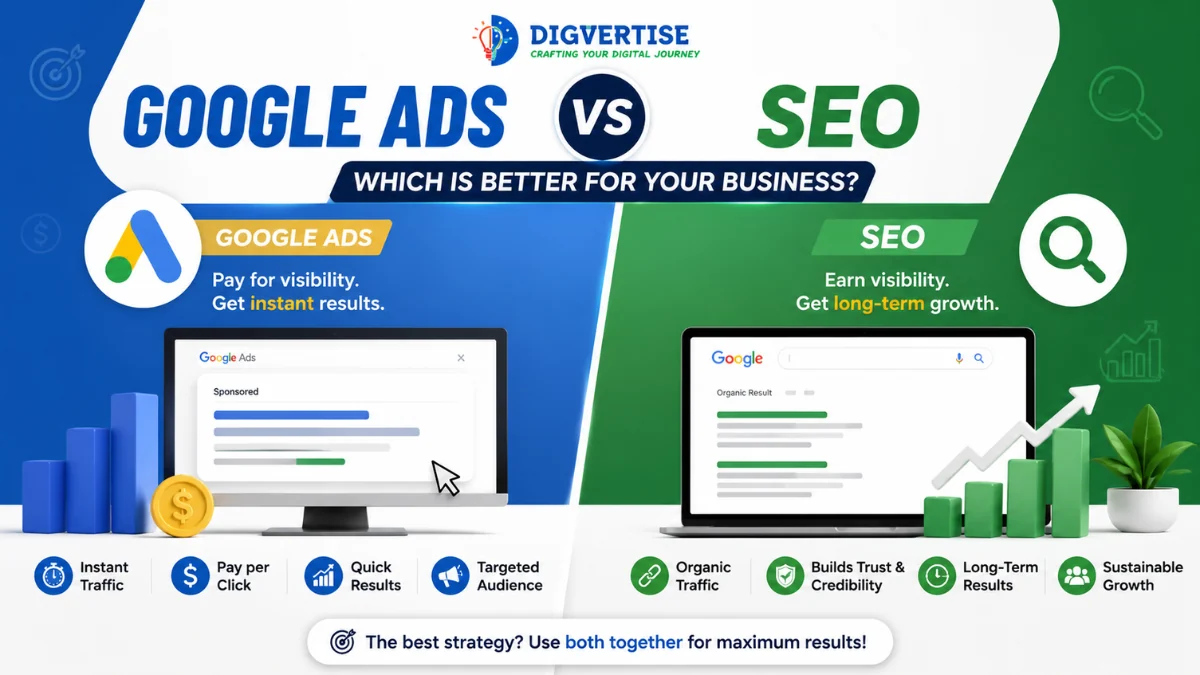
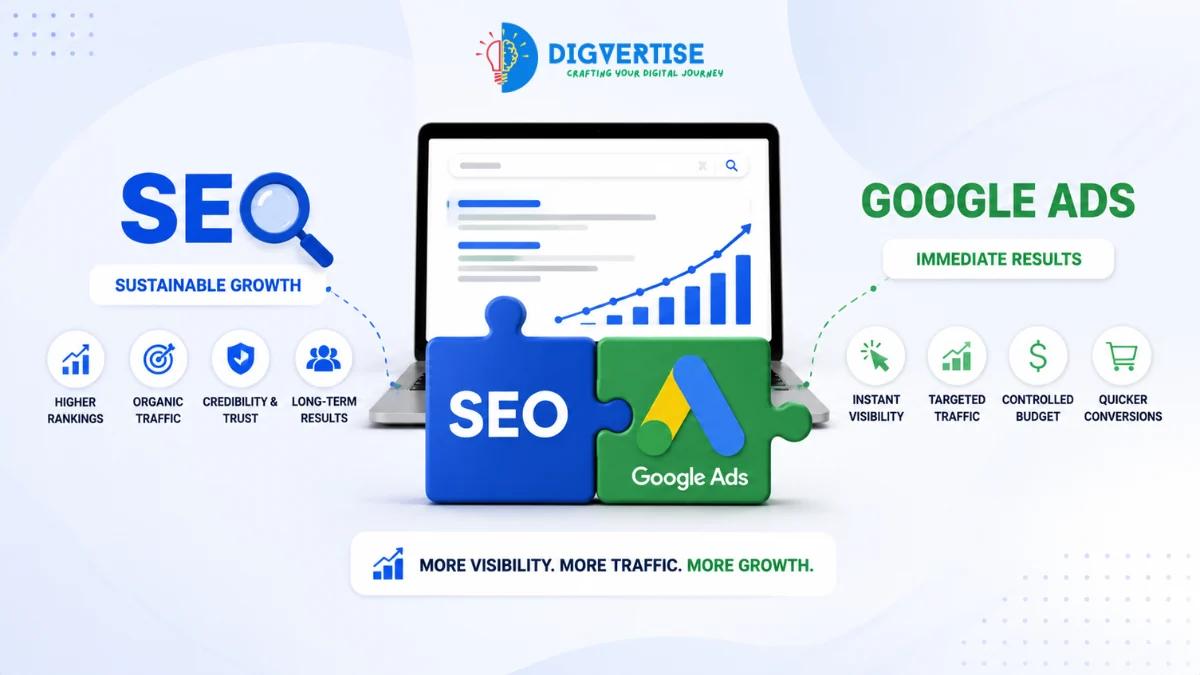
Clicks are purchased opportunities to continue a relevant conversation. Value appears only when the complete journey works and measurement reflects reality. This is different from choosing between channels; for that comparison, see Google Ads vs SEO: Which Is Better for Your Business?.
Check campaign settings that shape the journey
Location options, schedules, networks, devices and audience settings can change who sees an ad and when. A service team that answers only during business hours may need a different approach to after-hours calls. A location-based business should verify whether targeting reflects people in the service area rather than broad interest in it. Settings should follow operational reality.
Use search terms as customer research
Search term reports reveal language, confusion and adjacent demand. Group terms by intent and fit instead of adding negatives one by one without a model. Useful groups may include direct service, problem-based, comparison, jobs, education, DIY, supplier and unrelated meanings. This makes exclusions more consistent and can inform landing-page language.
Landing pages should answer the paid-search decision
The page should identify the service, intended customer, area served and meaningful differentiators quickly. It should handle the objections implied by the query and provide evidence connected to those claims. Keep navigation if it helps evaluation, but avoid forcing visitors through unrelated pages before they can act.
Call conversions need operational validation
A call click is not automatically a qualified conversation. Confirm whether calls connect, how long they last, whether staff answer appropriately and what outcome follows. If call recording is used, comply with applicable consent and privacy requirements. Mark spam and wrong-number calls separately from genuine leads.
Budget can hide prioritization problems
A campaign spread across too many services or locations may never collect enough useful data in any segment. Prioritize the offers with clear demand, suitable economics and operational capacity. A smaller focused campaign can teach more than a broad campaign that distributes limited budget across unrelated intentions.
Optimization needs a feedback loop
Send lead outcomes back to the advertising team: qualified, unqualified, unreachable, proposed and won. Platform automation improves when it receives meaningful conversion signals, but teams should protect privacy and follow current consent rules. Even without advanced imports, a regular lead-quality report can change keyword and landing decisions.
Changes to avoid during diagnosis
- Raising budget before confirming tracking.
- Changing bids, ads, keywords and pages simultaneously.
- Optimizing toward button clicks rather than completed actions.
- Pausing terms from too little data without checking intent.
- Using aggressive urgency to compensate for weak trust.
- Ignoring missed calls and response delays.
Repair the largest leak first, keep a record of the change and give the campaign enough clean data to evaluate. Random simultaneous edits make learning harder and can hide the original cause.
Key takeaways
What to remember
- Clicks do not prove intent or conversion quality.
- Search terms and match logic need regular review.
- Ad and landing-page continuity reduce friction.
- Conversion events must match real completed actions.
- Follow-up and lead quality belong in campaign analysis.
FAQ
Common questions
Why am I getting Google Ads clicks but no leads?
Likely causes include wrong search intent, broad keyword matching, ad-to-page mismatch, weak landing pages, incorrect tracking, form friction, mobile problems, low trust or poor follow-up.
Can conversion tracking be wrong?
Yes. Events may fail to fire, fire too early or not match received leads. Test every conversion from ad click through the real business handoff.
Should Google Ads go to the homepage?
A focused service or landing page is often more relevant because it can continue the ad promise and provide the exact proof and action the searcher needs.
References
Sources and further reading
- Google Ads: Conversion Tracking Definition (opens in a new tab)
Official definition of valuable conversion actions.
- Google Ads: Set Up Web Conversions (opens in a new tab)
Official website conversion measurement guidance.
- Google Ads: About Keyword Matching Options (opens in a new tab)
Official keyword match behavior guidance.
Editorial trust
Digvertise Editorial Team
Digvertise Editorial TeamResearch-led practical guidance prepared by the Digvertise editorial team.
- Editorial date
- August 10, 2026