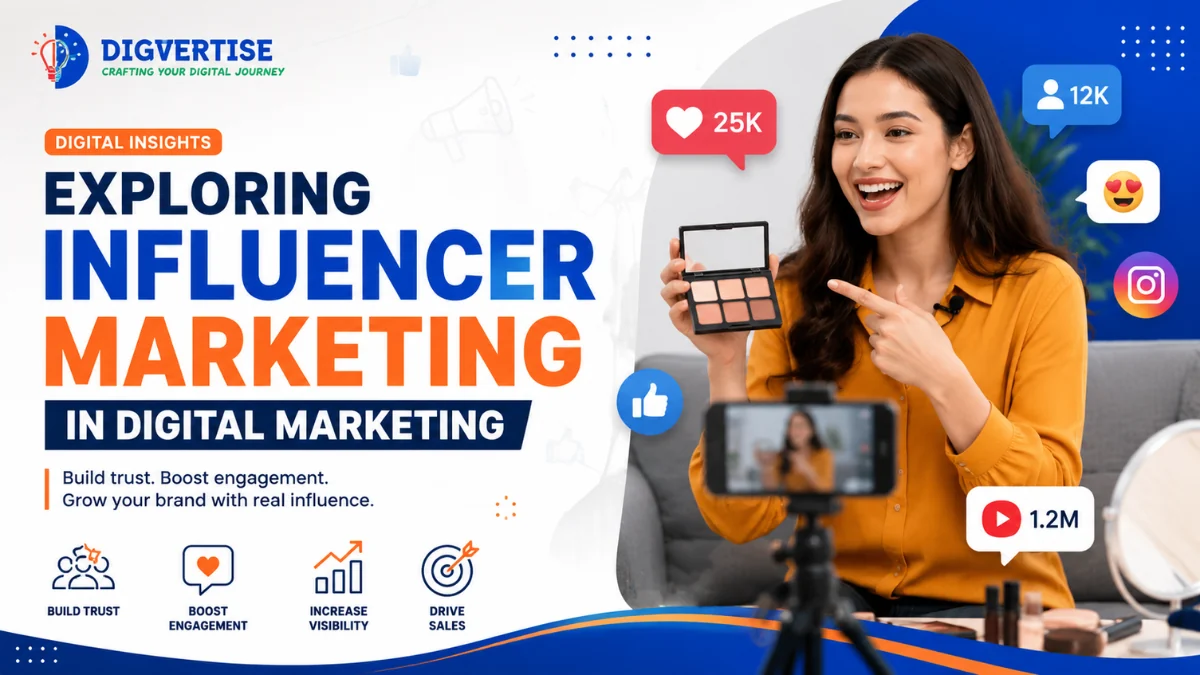
Every day, millions of people scroll through Instagram, YouTube, and LinkedIn. They aren't looking at banner advertisements or search engine sponsorships. They are looking at content created by people they trust. When a trusted creator recommends a dental clinic, a software tool, a jewellery showroom, or a local service provider, their recommendation carries the weight of a personal recommendation.
This shift from traditional advertising to creator-driven recommendations is the core of influencer marketing. As a business owner, you know that trust is the ultimate conversion tool. The challenge is moving past vanity metrics - like likes and follows - to build Creator campaigns that drive actual enquiries and scale your revenue.
At Digvertise, we look at creator partnerships through a practical business lens: acquisition cost, lead quality, and brand authority. The goal is to build an acquisition pipeline that works for you in the background. Running creator campaigns without direct tracking systems is simply speculation. But when done right, creator marketing builds rapid trust that search engine placements alone can take months to establish.
Many business owners assume they need massive budgets to work with celebrity creators. In reality, working with targeted, highly engaged micro-creators is far more effective for generating local and B2B leads. This guide explains how to build a reliable creator strategy.
What Influencer Marketing Actually Means
Influencer marketing is the process of partnering with content creators to promote your services or products to their audience. It is not about paying someone to read a generic sales script. It is about co-creating content that addresses their audience's problems while presenting your business as the solution.
For example, when a prospect runs a scan using our Online Business Score tool, they receive their results instantly. If a B2B business consultant creator demonstrates this tool to their audience, showing how they can check their local search presence, it creates instant trust. That demonstration translates to qualified enquiries.
Why Generic Influencer Campaigns Fail
Most influencer campaigns fail because they focus on the wrong metrics. Business owners pay macro-creators with millions of followers, assuming that reach equals sales. What they discover is that a million followers spread across multiple countries do not convert into clients for a CA firm in Pune or a dental clinic in Dadar.
Without direct tracking, you waste marketing budget on empty views. Leads are not tracked, creator performance is not measured, and follow-ups are non-existent. Growth rarely slows because of lack of demand. It usually slows because operations and marketing channels are not aligned to capture and trace leads.
The Digvertise Creator Trust Framework™
To eliminate waste, we developed the proprietary Digvertise Creator Trust Framework™. This framework outlines a 5-level path to creator campaign success:
- Level 1 - Audience Alignment Audit: Analyze a creator's audience metrics. Verify that their followers match your target geographic region, budget bracket, and service needs.
- Level 2 - Authentic Integration: Co-create value-packed content. Instead of a direct advertisement, let the creator explain how your service resolved a specific problem or saved them time.
- Level 3 - Direct Handoff Setup: Build dedicated landing pages and unique tracking codes, then use the Website Growth Analyzer to confirm that the mobile experience is ready for campaign traffic.
- Level 4 - Lead Route Automation: Connect creator links to your CRM using Growth Automation Services. When a lead signs up, trigger a near-instant WhatsApp confirmation.
- Level 5 - Content Asset Syndication: Reuse the creator's video assets in your paid Google Ads Services campaigns and website testimonials to double their conversion value.
Micro-Creators vs Macro-Creators: A Comparison
To help you evaluate partnership options, let's compare micro-creators versus macro-creators across key business metrics:
FeatureMicro-Creators (10k - 100k followers)Macro-Creators (100k+ followers)Engagement RateHigh (active comments, replies, and community trust)Lower (broad, passive audience engagement)Campaign CostAffordable (often product exchange or minimal fee)High (expensive flat fees per post)Audience FocusHighly targeted (niche, industry, or local region)Broad (scattered demographics and interests)Lead QualityHigh commercial intent (relevant leads)Low intent (mostly vanity clicks and likes)Attribution TrackingEasy (using custom links and coupon codes)Harder (difficult to isolate from general brand buzz)
Core Pillars of Creator Marketing
If you want to introduce creator marketing to your business, focus on these three core pillars first:
Pillar 1: Audience Authenticity: Before signing an agreement, verify that the creator's audience matches your physical target coordinates. If you run a local Pune clinic, a creator with followers in Delhi is not useful. Check their comment section to ensure real people are interacting, not automated profiles.
Pillar 2: Creative Partnership: Allow the creator to use their natural voice. If you force them to read a dry corporate presentation, their audience will skip the video. The recommendation must feel authentic to retain trust.
Pillar 3: Conversion Readiness: Ensure the traffic lands on a fast, responsive page with a clear next step. If your landing page has slow loading times or cluttered layouts, visitors will bounce, wasting your campaign budget.
Automation should never replace relationships. It should remove repetitive work so your team can spend more time with customers. Set up automated WhatsApp links so creator traffic can message you directly.
Common Creator Marketing Mistakes to Avoid
Avoid these common pitfalls to protect your marketing budget:
Focusing on vanity metrics: Choosing creators based only on follower counts rather than audience alignment and comment interaction.
Sending traffic to your home page: When a creator reviews a specific service, send visitors to a dedicated landing page built for that service, not your website's home page.
Cross-check NAP consistency across Google Maps, social media, and local search trust coverage.
Neglecting conversion tracking: Launching creator campaigns without custom UTM parameters or unique coupon codes, making it impossible to calculate ROI.
Failing to secure content rights: Not agreeing on terms to reuse the creator's video assets in your paid ads, missing out on long-term campaign value.
Illustrative Example
Illustrative Example - not a real client
Consider a local dermatological clinic in Dadar, Mumbai. The clinic decided to partner with a lifestyle creator with 150,000 followers. They paid a significant fee for one Instagram video. The video got thousands of likes, but the clinic only received three local enquiries. They discovered the creator's audience was mostly teenagers spread across different states.
They adjusted their strategy. They identified three micro-creators (each with around 15,000 followers) who lived in Mumbai and actively discussed local lifestyle and skincare tips. They gave each creator a complimentary skin diagnostics session. Each creator posted a video explaining their real experience and shared a custom booking link.
The booking links connected directly to the clinic's appointment calendar, offering a direct response. Within three weeks, the clinic received over 40 local appointment reservations, proving that targeted micro-creators drive higher business conversion than broad macro-creators.
Actionable Creator Campaign Checklist
- Use this checklist to structure your creator marketing campaign:
- Define Your Target Audience: Map your ideal customer's age, location, and interests.
- Identify 5 Niche Creators: Find creators whose followers match your target customer profile.
- Verify Audience Quality: Check engagement levels and comment quality on their recent posts.
- Create Dedicated Landing Pages: Build fast, responsive pages for creator traffic.
- Set Up Custom UTM Links: Create unique tracking URLs for each partner.
- Draft Clear Creative Briefs: Define the key problems your service solves.
- Establish Content Rights: Secure terms to reuse creator assets in your social profiles.
- Connect Conversion Tracking: Ensure lead forms route directly to your database.
- Measure Cost per Acquisition: Analyze combined marketing spend versus acquired clients.
Conclusion
Most businesses don't need complicated marketing setups. They need clarity. The first step is understanding where your leads slow down, where follow-ups break, and where manual work consumes valuable time. Partnering with targeted micro-creators is one of the most reliable ways to build local trust and grow.
Key takeaways
What to remember
- Every day, millions of people scroll through Instagram, YouTube, and LinkedIn. They aren't looking at banner advertisements or search engine sponsorships. They are looking at content created by people they trust. When a trusted creator recommends a dental clinic, a software tool, a jewellery showroom, or a local service provider, their recommendation carries the weight of a personal recommendation.
- This shift from traditional advertising to creator-driven recommendations is the core of influencer marketing. As a business owner, you know that trust is the ultimate conversion tool. The challenge is moving past vanity metrics - like likes and follows - to build Creator campaigns that drive actual enquiries and scale your revenue.
- At Digvertise, we look at creator partnerships through a practical business lens: acquisition cost, lead quality, and brand authority. The goal is to build an acquisition pipeline that works for you in the background. Running creator campaigns without direct tracking systems is simply speculation. But when done right, creator marketing builds rapid trust that search engine placements alone can take months to establish.
FAQ
Common questions
What is a micro-creator, and why should small businesses work with them?
Micro-creators are content creators with 10,000 to 100,000 followers focused on a specific niche or local region. Small businesses should work with them because their campaigns are affordable, their audiences are highly targeted, and their community trust is much higher compared to macro-celebrity creators.
How do I measure the ROI of an influencer marketing campaign?
Measure ROI by tracking direct conversions using custom UTM links and unique creator promo codes. Divide the total creator fee by the number of acquired leads to find your Cost per Acquisition (CAC). You can check your tracking readiness using our [Local SEO Services](/services/local-seo/) audit.
How much should I pay a creator for a promotion?
Fees vary depending on the platform, reach, and engagement levels. For local micro-creators, you can often negotiate partnerships based on complimentary service trials or product exchanges. For paid promotions, negotiate flat rates based on past conversion performance.
Which platform is best for local business influencer campaigns?
Instagram and YouTube are highly effective for visual services (like dental clinics, showrooms, or resorts). LinkedIn is the ultimate channel for B2B services (like CA firms or agencies). Focus on the platform where your target clients spend their time.
How do I find relevant local creators?
Search local hashtags (like #MumbaiFoodie or #PuneDentist), look at who tag your local competitors, and check local business directory mentions. Focus on creators who live in your target city and maintain active comment sections.
Can I reuse creator content in my paid Google Ads?
Yes, but you must secure content rights in your initial agreement. Reusing creator-generated videos in your [Google Ads Services](/services/google-ads/) campaigns increases ad recall, builds instant trust, and lowers average click costs.
Should I review a creator's content before they post?
Yes. Review the video or post to ensure your brand name is pronounced correctly and your primary CTA is clear. However, do not over-edit their natural voice or scripting style, as authenticity is what drives conversion.
Can growth automation work for businesses with fewer than five employees?
Yes. Small businesses benefit the most because automation reduces repetitive tasks - like manually copy-pasting creator lead details - without requiring additional administrative hiring. It ensures your client pipelines run on autopilot.
Editorial trust
Digvertise Team
Digvertise editorial teamPractical digital marketing guidance prepared by the Digvertise Team.
- Published
- January 12, 2026