Social Media Marketing
Choose social media marketing for a consistent content and community presence on priority channels.
Perfect ForGrowing brands · Community-led businesses · Active content teams
Explore Social Media Marketing
Crafting Your Digital Journey
EMAIL MARKETING
Email marketing gives your business a direct way to educate leads, follow up consistently and stay connected with customers. Well-planned campaigns and automated journeys can reduce missed opportunities and support retention without sending irrelevant messages.
WHAT IS...
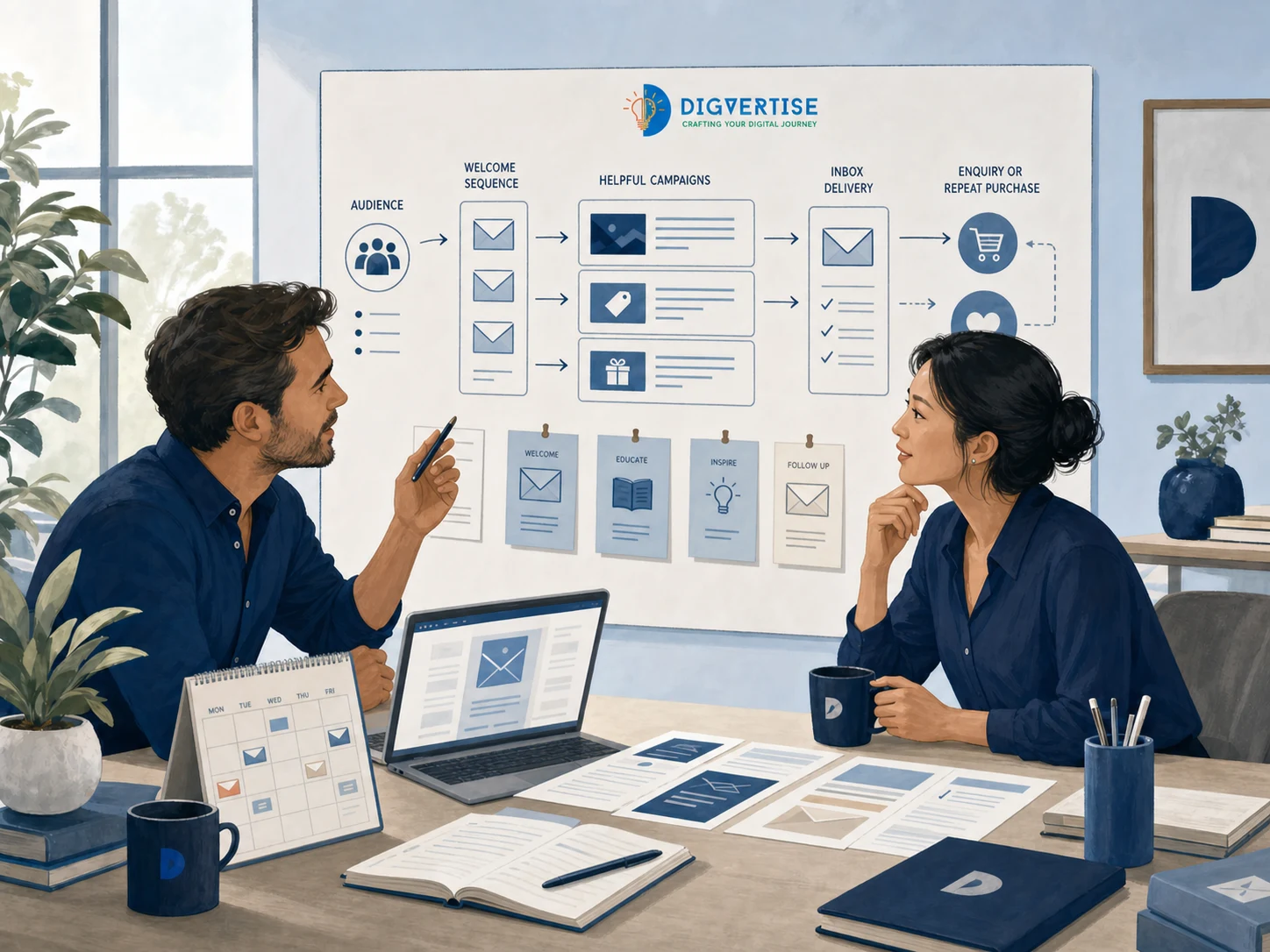
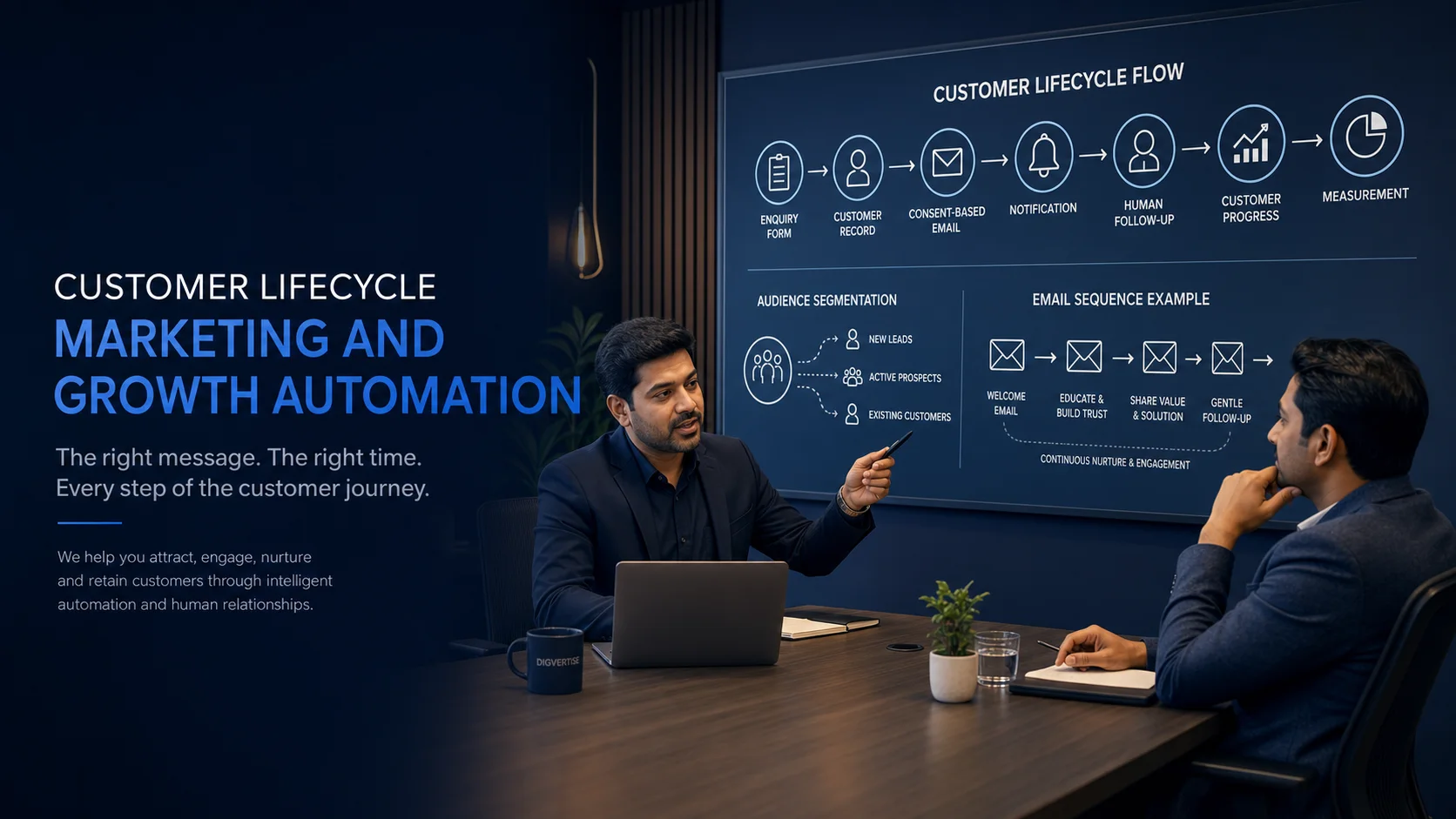
Email marketing is a permission-based system for communicating directly with leads and customers through campaigns, newsletters and automated sequences. It uses audience segmentation, relevant messages, timing and performance data to support education, follow-up, retention and repeat purchase.
Businesses need it when valuable enquiries go quiet, sales cycles require several conversations or existing customers receive little structured follow-up. Email should be considered once consent and contact data are reliable; from there, the priority is to send fewer, more useful messages connected to a clear customer stage and next action.
RELATED SOLUTIONS
Choose social media marketing for a consistent content and community presence on priority channels.
Choose influencer marketing when creator credibility can explain or demonstrate the offer effectively.
WHY IT MATTERS
Relevant emails help prospects understand the next decision without requiring repeated sales calls.
Thoughtful follow-up gives interested contacts another opportunity to return when timing improves.
Customer messages can surface useful services, replenishment needs and timely reasons to return.
Permission-based contact provides a direct relationship that is not controlled by a social platform.
HOW DIGVERTISE WORKS
Understand customer stages, consent, sales cycles and where useful follow-up currently breaks down.
Identify the messages and timing that can resolve uncertainty or prevent relationships going quiet.
Plan campaigns and sequences around audience relevance, frequency and a clear next decision.
Execute dependable email journeys with accurate data, readable content and responsible delivery.
Improve communication using response, conversion, retention and unsubscribe patterns.
WHY CHOOSE DIGVERTISE
We treat customer consent, message value and frequency as business requirements rather than obstacles to sending more email.
Campaigns and sequences are designed around the customer stage and decision before any automated workflow is configured.
Reporting considers replies, enquiries, purchases, retention and unsubscribes so the next decision reflects real customer behaviour.
WEBSITE GROWTH ANALYZER
Website Growth Analyzer checks whether email messages lead to pages with a consistent offer, readable information, usable forms and a clear continuation path. Reviewing the destination first helps prevent stronger email campaigns from sending interested customers into a confusing or unreliable website journey.
QUESTIONS BUSINESS OWNERS ASK
Email becomes useful when the business has permission-based contacts and a genuine reason to continue the conversation after an enquiry or purchase. The list does not need to be enormous, but consent, data quality and customer relevance must be clear. It is also important to know what action or understanding each message should support. Buying a list or sending frequent promotions without that foundation usually creates risk and weakens trust rather than building a durable channel.
Frequency should reflect the relationship, message value and customer stage. A lead considering a complex service may need a short, well-timed sequence, while customers may prefer occasional useful updates. More email is not automatically better. Watch replies, conversions, unsubscribes and complaints alongside engagement. The right cadence gives people enough information to make a decision without creating pressure or teaching them that most messages can safely be ignored.
Not necessarily. First understand the contact data, consent records, customer stages and follow-up responsibilities already in place. The existing platform may be sufficient if it can segment audiences, manage preferences and report on meaningful actions. A replacement makes sense when current limitations prevent reliable delivery or create operational risk. Choosing software before mapping the journey often adds cost while leaving the original communication and ownership problems unresolved.
LET'S TALK
Share where leads or customer conversations currently go quiet. We can discuss whether email campaigns, a focused sequence or operational changes should come first.