
Turn A Useful Idea Into A Clear Mobile Experience.
Mobile app design and development turns a business use case into structured screens, reliable workflows and an accessible mobile experience. It begins with the user problem and the actions the app must support before interface design or development decisions are made.
- User need first
- Clear product scope
- Accessible mobile journeys
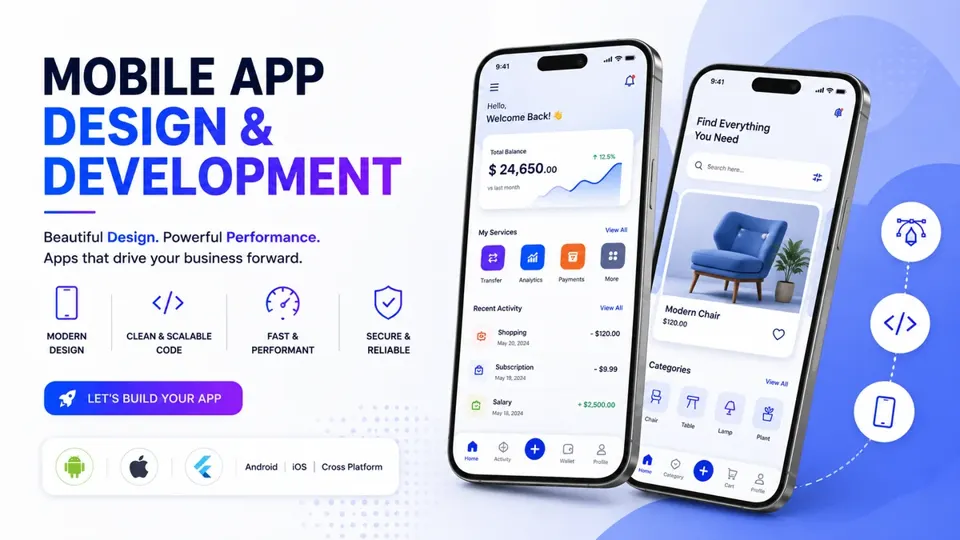
What it is
What is Mobile App Design & Development?
Mobile app design and development turns a recurring user need into a focused product for phones and tablets. It combines product discovery, user flows, interface design, technical architecture, development and testing so core tasks remain understandable and reliable in everyday use.
A business should consider an app when customers or teams repeat a high-value task that a mobile experience can make meaningfully easier, not simply because competitors have one. Early work should confirm the use case, adoption plan, integrations and ongoing ownership before investment moves into detailed screens and software development.
- Validated product purpose
- Simple core user journeys
- Maintainable technical planning
Why it matters
Why Mobile App Design & Development Matters
Mobile app design and development can make a frequent customer or operational task faster, simpler and available at the point of need. Building too late may preserve costly friction, while building without a clear use case creates expensive software people ignore.
- 01
Simplify repeated tasks
A focused mobile journey can remove unnecessary steps from actions users complete often.
- 02
Serve customers anywhere
Reliable mobile access keeps essential account, booking or service actions close at hand.
- 03
Reduce operational pressure
Self-service flows can resolve routine needs without adding avoidable work for support teams.
- 04
Validate product demand
A disciplined first release shows whether the core app idea merits continued investment.
This train's route
Five stations. One destination.
We clarify the problem, map essential journeys, test interface decisions and plan development around a manageable first release.
- Understand
Understand the recurring user problem, business case and operating environment for the app.
- Identify
Identify the essential journeys and constraints that determine whether a dedicated product is justified.
- Plan
Plan a focused release around user value, technical feasibility and manageable scope.
- Execute
Execute interface and development decisions as one reliable mobile product experience.
- Improve
Improve the app using adoption, task completion, support feedback and changing user needs.
Why Digvertise
Why Choose Digvertise for Mobile App Design & Development?
- 01
The user problem earns scope
Features must support a repeated user need or clear business requirement before they enter the product roadmap.
- 02
Product and engineering align
Journey, interface and technical decisions are made together so usability is not separated from build feasibility.
- 03
Release choices use evidence
The team can see what belongs in the first release, what can wait and what user behaviour should guide next.
Check Whether Your Website Supports the App Opportunity
Website Growth Analyzer reviews how clearly the website explains the proposed product, customer use case and mobile journey while capturing genuine interest. This provides useful context before app investment, helping the business separate a real recurring need from a problem the existing website could solve more simply.
- Product explanation
- Use-case clarity
- Mobile behaviour
- Interest capture
Connecting trains
Or this train may fit better.
Mobile App Design & Development may be the right priority, or the business may need a related service first. Use the decision guidance below to compare the practical role of each option.
-
DV-101 · WEBSITE MAIL
Web Design & Development
Choose website design and development when the customer experience or enquiry path needs a stronger foundation.
Perfect for: Service businesses · New ventures · Website redesigns -
DV-304 · AUTOMATION SHUTTLE
Growth Automation
Choose growth automation when manual lead handling or handoffs create avoidable delay.
Perfect for: Growing sales teams · High enquiry volume · Repeated handoffs
Questions business owners ask
Enquiry window
Does the business need an app, or would a better mobile website be enough?
An app is justified when users have a recurring need that benefits from device features, saved state, notifications, offline access or a dedicated workflow. If the main requirement is information, enquiries or occasional transactions, improving the mobile website may be more practical. The decision should consider adoption, maintenance and how users will return after installation. We would define the repeated problem first rather than assuming an app is the natural next stage of digital growth.
What belongs in the first release of a mobile app?
The first release should contain the smallest complete experience that solves the core user problem and provides useful evidence. Essential account, task and support paths may be necessary, while secondary personalisation or administrative features can often wait. Scope should also include reliability, accessibility, analytics and operational handling, not only visible screens. A narrow release is valuable when it tests a real business assumption, not when it simply postpones decisions required for the product to function.
What determines the cost and timeline of app development?
The main factors are product scope, platforms, integrations, security, content, design depth and the testing needed for reliable release. Internal approval speed and unresolved business rules also affect timing. A simple interface can still require complex systems behind it. We prefer to clarify journeys and technical constraints before estimating the full build. That produces a more defensible range and reveals whether a staged release can reduce risk without compromising the core experience.
Come to the platform
Evaluating a Mobile Product Idea?
Tell us the repeated user problem the app should solve. We can discuss whether a dedicated product is justified and what a focused first release might include.