Campaign Planning
Define goals, priorities, locations, services, and campaign structure.

Crafting Your Digital Journey
GOOGLE ADS SERVICES
Google Ads can help your business appear when people actively search for products or services like yours. Successful campaigns connect the right audience, message, landing page, and continuous optimization.
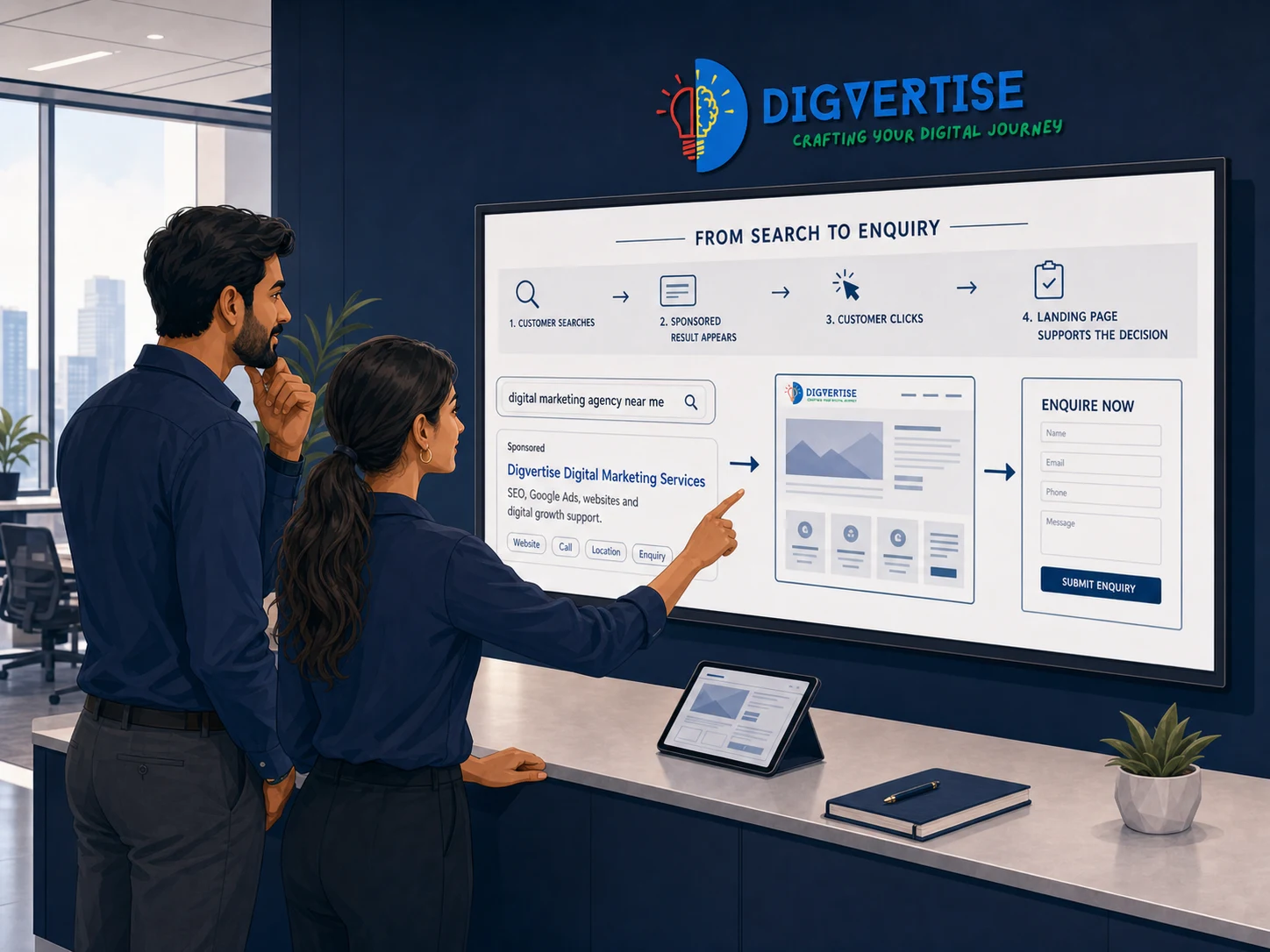
START WITH YOUR GOAL
What this means
Google Ads may help you reach people already searching, provided your offer, website, and response process are ready.
THE PAID SEARCH JOURNEY
A person needs a product, service, answer, or solution.
They search using words that describe what they need.
A relevant campaign may become eligible to appear.
The visitor reaches a page that should match the advertisement.
Clear information and a useful experience support the decision.
The visitor may call, enquire, book, visit, or purchase.
Eligible advertisements enter an automated auction. Google considers the bid together with campaign settings, advertisement quality, relevance, and the usefulness of the landing page. A higher budget alone does not guarantee the strongest opportunity.
CAMPAIGN FOUNDATIONS
Define the business action the campaign should support.
HOW DIGVERTISE THINKS
Current focus
Define what the campaign should help the business achieve.
SERVICE COVERAGE
Define goals, priorities, locations, services, and campaign structure.
Understand how suitable customers search and which needs are relevant.
Identify page improvements that may help visitors understand the offer and act.
Create campaigns, groups, advertisements, targeting, and essential settings.
Connect customer intent with a clear business offer.
Focus campaign eligibility on suitable people and service areas.
Configure measurement for relevant customer actions where technically possible.
Explain what happened, what was learned, and what should happen next.
Review actual searches and reduce irrelevant activity where appropriate.
Improve messages, targeting, structure, and budget allocation using available evidence.
Activities depend on the agreed scope, platform access, website readiness, tracking availability, and advertising budget.
BUDGET CLARITY
The amount available within the campaign settings.
Clicks, calls, or other suitable advertisement interactions.
People who reach the website or landing page.
The enquiries, bookings, purchases, or other actions being tracked.
Evidence used to improve future campaign decisions.
A click is both a cost and a source of information. Its value depends on what happens after it.
REALISTIC EXPECTATIONS
Google Ads can increase opportunity. The complete business experience influences the result.
START WITH EVIDENCE
Your website shapes what happens after an advertisement earns attention. Website Growth Analyzer helps identify issues that may weaken customer understanding and action.
Analyze first. Then choose the right next step.WHY DIGVERTISE
Campaign decisions begin with the goal and customer journey.
No guaranteed sales or unrealistic performance claims.
Performance is reviewed through meaningful actions, not surface-level activity.
FREQUENTLY ASKED QUESTIONS
There is no single suitable budget for every business. The starting budget depends on your location, competition, goals, offer, expected customer value, and the amount of data needed to make useful decisions.
Advertisements can begin receiving visibility after a campaign is approved and active. Meaningful evaluation requires enough search activity, budget, tracking evidence, and customer response.
No. Google Ads can help create visibility and traffic, but results also depend on the offer, website, pricing, trust, competition, customer demand, and follow-up process.
Google Ads supports location targeting. The right setup depends on where your customers are and where your business can genuinely serve them.
Not always. The destination page must closely match the advertisement, answer the visitor’s need, build confidence, and make the next step clear.
Yes. Google Ads can support paid visibility while SEO works toward stronger organic discovery. The right combination depends on your goals, timeline, website, and budget.
Tracking should focus on actions that matter to the business, such as calls, enquiry forms, bookings, purchases, store visits, or other valuable customer actions.
Campaign reporting should explain spend, traffic, tracked actions, search behaviour, and the improvements being made. Available reporting depends on account access and tracking quality.
START WITH THE RIGHT FOUNDATION
Whether you want to generate enquiries, promote a new offer, reach customers in a specific market, or understand demand, Digvertise can help you identify a suitable starting point.
Clear goals. Relevant campaigns. Measurable decisions.